Digital Productivity, Online planners, Planners
Daily Weekly Planner: Best Dual-Format Options
Apr
Okay so I’ve been testing dual-format planners for like three months now and honestly the whole daily-weekly combo thing is trickier than it sounds because most companies just slap both formats in one book and call it a day without thinking about how people actually use them.
The Paper Situation Everyone Ignores
First thing nobody tells you is that paper weight matters SO much more in dual-format planners than regular ones. I found this out the hard way when I was testing the Panda Planner and writing my weekly goals while watching Succession (no spoilers but wow), and the ink just bled straight through to my daily page underneath. Super annoying because now I’m looking at Wednesday’s schedule through this ghost image of “Q3 revenue targets” or whatever.
You want at least 100gsm paper. The Clever Fox planner uses 120gsm and it’s honestly been the most reliable for preventing bleed-through. I use Stabilo fineliners which are pretty wet pens, and even those don’t show through. Moleskine’s dual planners are only 70gsm which is just… why would you do that to people who actually write things.
Layout Styles That Actually Work
There’s basically three ways companies handle the dual format thing and I’ve tried all of them extensively because my client canceled last Tuesday so I spent like two hours just comparing layouts at my desk.
The Side-by-Side Method
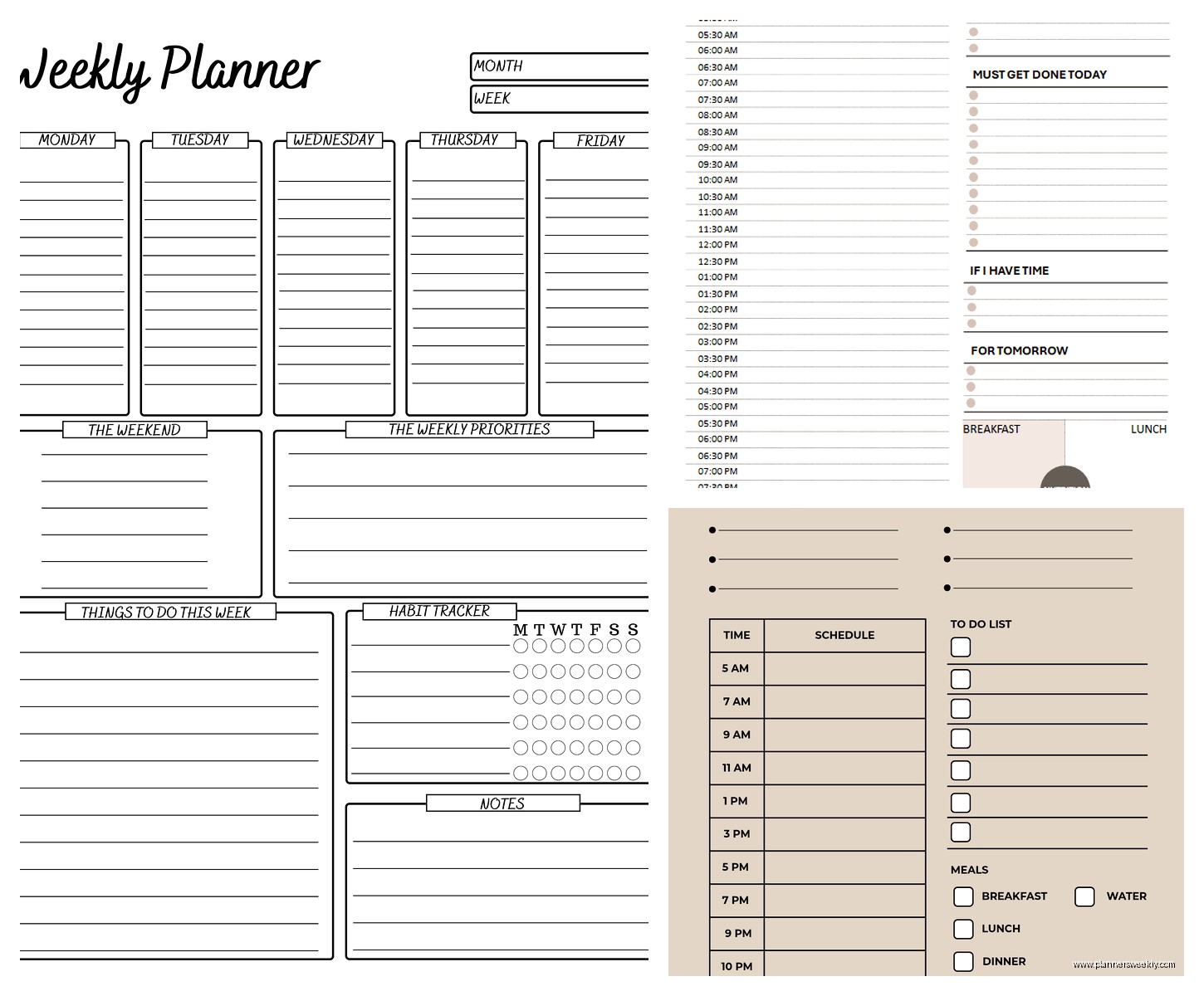
This is where your weekly overview sits on the left page and daily breakdowns are on the right. Passion Planner does this and it’s pretty intuitive at first. You get your bird’s eye view of the week, then you flip and boom, there’s Monday through Sunday with hourly slots.
The problem I found is that you’re constantly flipping back and forth. Like I’m planning Tuesday, but I need to check what I said my weekly priority was, so I flip back, then flip forward, then realize I forgot to note something on the weekly page, flip back again. Got old really fast.
Best for: people who plan everything on Sunday night in one sitting and don’t really touch their planner much during the week. Which honestly isn’t most of us.
The Stacked Format
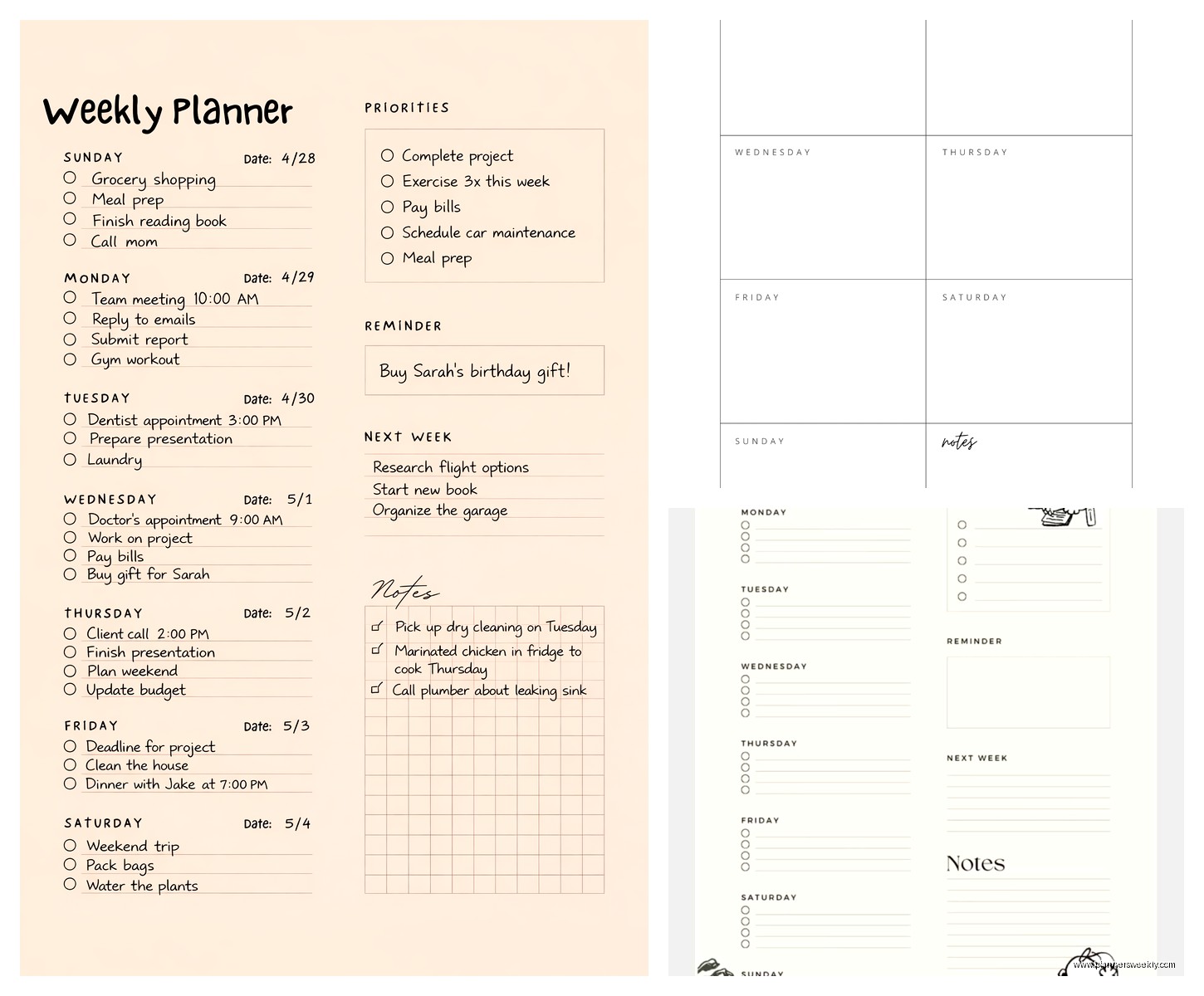
This is what Ink+Volt does and also the Wordsworth planner I tested last month. Weekly overview gets its own dedicated spread at the start of each week, then you turn the page and get seven individual daily pages.
I actually love this format? It feels more natural because you’re moving chronologically through the book. Monday’s page comes after Sunday’s page like a normal human would expect. The weekly spread serves as this planning session page where I dump everything on Sunday evening, then each day I just flip to that specific date and work from there.
The Ink+Volt one has this thing where the weekly page includes a priorities box and a “focus for the week” section that I thought would be cheesy but genuinely helps. Like last week my focus was “stop accepting 4pm meetings” and just having that written at the top of my week kept me honest.
Downside is these planners get THICK because you’re essentially doubling your page count. The Wordsworth planner is like 400 pages and doesn’t fit in most bags easily.
The Hybrid Disaster
Some planners try to do both formats on the same spread and it’s just cramped and terrible. I tested one from Blue Sky that had a weekly overview squeezed into the top third of each daily page and you couldn’t actually write anything useful in either section. Hard pass on this whole category.
Digital Platform Options That Don’t Suck
Wait I forgot to mention digital options and honestly that’s where dual-format actually shines because you’re not fighting with physical space constraints.
Notion Templates
I built my own dual-format setup in Notion and it’s pretty solid. You create a database for daily entries and another for weekly reviews, then link them with relations. Sounds complicated but there are templates you can duplicate.
The “Weekly Agenda” template by Thomas Frank has both views built in. You get a gallery view showing your whole week as cards, click into any day and it opens the daily page with your schedule, tasks, notes, whatever. Then there’s a separate weekly planning page where you set goals and track habits.
The thing with Notion is you gotta be okay with the learning curve. My friend tried setting this up and gave up after like 20 minutes because she just wanted to write down her meetings, not build a database architecture. Fair.
Best for: people who are already in Notion for other stuff and want everything in one place. Also if you like customizing things because you can add literally any field or view you want.
Structured App
This app is specifically designed for daily/weekly planning and honestly it’s the most intuitive digital option I’ve found. The interface shows you today’s schedule in the main view, but swipe left and you get your whole week laid out.
What I really like is how it handles recurring tasks. You can set something as a weekly goal and it automatically appears on your weekly view, but then you can drag it to specific days when you actually wanna do it. So like “write three blog posts” lives on my weekly page, but I drag one to Tuesday, one to Thursday, one to Saturday and those become daily tasks.
It’s $10/month though which feels steep for a planner app? I’m still using it because it syncs with my calendar and I can access it on my phone and iPad, but yeah, that adds up.
Google Sheets Because Why Not
Okay this is gonna sound weird but I have a client who runs her entire business from a Google Sheets dual planner and it actually works great for her. She’s got one tab for weekly planning with all her goals and priorities, then separate tabs for each day of the week with time-blocking.
The advantage is you can create your own template exactly how you want it. Add conditional formatting so overdue tasks turn red, use formulas to calculate how many hours you’ve allocated to different projects, link to other sheets with your project trackers or whatever.
The disadvantage is you’re staring at a spreadsheet which feels very corporate and not exactly inspiring. But functionality-wise it’s hard to beat if you’re comfortable with Sheets.
The Actual Best Options I’d Recommend
Right so after testing like fifteen different planners, here’s what I actually use and recommend depending on what you need.
For Traditional Paper Planning: Clever Fox
The Clever Fox Planner Pro is what I keep coming back to. It uses the stacked format with weekly pages followed by daily pages. The paper quality is excellent at 120gsm, it lies flat (IMPORTANT and so many planners fail at this), and the layout isn’t trying to do too much.
Each weekly spread has space for goals, priorities, and a habit tracker. Then the daily pages have hourly time slots from 6am to 9pm, a top three tasks section, and notes space. That’s it. No weird motivational quotes or gratitude prompts or whatever.
It comes in three-month and twelve-month versions. I use the three-month because I like switching up my system seasonally and also these planners are expensive enough that committing to twelve months feels risky.
Price is around $35-40 depending on the version. Not cheap but the quality justifies it.
For Minimalists: Hobonichi Weeks
If you want something way more compact, the Hobonichi Weeks is brilliant. It’s a Japanese planner that’s basically the size of a passport. The left page has your whole week in vertical columns, the right page is blank for notes and daily details.
I use this when I’m traveling or just want to carry something smaller. The paper is Tomoe River which is super thin but somehow doesn’t bleed even with fountain pens. It’s kinda magical.
The format forces you to be concise which I actually find helpful? Like you can’t write a novel about your day, you gotta pick the essential stuff. Good for people who tend to overplan (me, definitely me).
About $40 and you can get covers for it separately which is a whole rabbit hole of cute Japanese stationery I won’t get into right now.
For Digital: Structured App
Already mentioned this but yeah, if you’re going digital, Structured is what I’d pick. The interface actually makes sense, it’s pretty to look at which matters more than it should, and the daily/weekly integration feels natural.
They have a free version that’s pretty limited but enough to test if you like the format. The premium is $10/month or $50/year.
For Budget-Conscious: Leuchtturm1917 Weekly Planner + Daily Journal Combo
Here’s a workaround I stumbled on: buy a Leuchtturm weekly planner (like $20) for your weekly overview and time blocking, then use a separate bullet journal for daily details. Sounds complicated but it’s actually kinda perfect?
The weekly planner gives you structure and you can see your whole week at a glance. Then your daily journal is flexible for brain dumps, meeting notes, random ideas, whatever comes up. You’re not trying to force everything into one predetermined format.
I did this for two months and honestly it worked better than some of the actual dual-format planners I tested. Plus Leuchtturm paper quality is solid and the notebooks are numbered pages with an index which helps if you’re referencing stuff later.
Things Nobody Mentions But Matter
Oh and another thing – binding type is weirdly important for dual-format planners because you’re flipping between sections constantly. Spiral binding is actually best for this even though it’s less aesthetic, because the planner stays open to whatever page you’re on.
I was using a Perfect Binding planner (glued spine) and it kept snapping shut while I was trying to reference my weekly page and write on my daily page. Super frustrating. Had to like, hold it open with my coffee mug which is not a sustainable solution.
Disc binding like the Levenger Circa system is good too because you can remove and rearrange pages. Some people take out their completed weeks and archive them which keeps the planner slim. Not for me because I’m paranoid about losing pages, but it’s an option.
Also check if the planner has perforated corners or page markers. The Passion Planner has these little tabs you can color-code for different weeks and it’s genuinely helpful for navigating quickly. Seems like a tiny detail but when you’re using this thing every day it adds up.
The Real Question Is How You Actually Plan
Honestly the best dual-format planner depends entirely on whether you’re a top-down planner or a bottom-up planner and most people don’t know which they are until they try both.
Top-down is when you plan your week first, set big goals and priorities, then break those into daily tasks. Bottom-up is when you plan each day as it comes and then review your week to see patterns.
I’m top-down so I need a strong weekly planning section where I can think strategically. Then my daily pages are just execution mode – what am I doing today to move toward my weekly goals. The stacked format works perfectly for this.
My friend Sarah is bottom-up and she hated every planner I recommended until she tried a side-by-side format where the daily pages are prominent and the weekly is more of a summary. Completely different use case.
If you don’t know which you are, try planning just on paper for a week. If you naturally start by thinking about your whole week and what you wanna accomplish, you’re probably top-down. If you naturally just plan tomorrow and figure out the week as you go, you’re bottom-up.
Digital vs Paper For Real Though
I keep going back and forth on this and currently I’m using both which is probably overkill but whatever. Digital for appointments and time-sensitive stuff because notifications and syncing across devices. Paper for goals, planning, thinking stuff because writing by hand actually helps me process.
The Clever Fox planner has a notes section where I’ll write my weekly priorities, then I’ll block time in Structured to actually do those things. Two systems talking to each other basically.
Some people do this backwards – weekly planning in a digital tool like Notion where they can see everything from their work projects, then daily execution in a paper planner that sits on their desk. Both work, just depends on where you spend your time.
My cat just knocked over my water bottle on my desk which is a sign I should probably wrap this up, but last thing I’ll say is don’t overthink it. I’ve tested fifteen planners and honestly most of them work fine if you actually use them consistently. The format matters less than just showing up and planning regularly.
Start with whatever’s cheapest or easiest to access, use it for a month, notice what frustrates you about it, then upgrade to something that solves those specific problems. You don’t need the perfect planner on day one, you need a planner you’ll actually open every morning.