
Digital Productivity, Online planners, Planners
Daily Productivity Planner: Best Systems & Templates
Mar
Okay so here’s what actually works for daily planning
I just spent like three weeks testing different daily planner systems because honestly I was spiraling with my own productivity and figured if I’m gonna recommend stuff to clients I should actually use it myself for more than two days. The Panda Planner came first because everyone kept tagging me in posts about it and I caved.
The daily layout is pretty solid actually. Morning review section, then your priorities, schedule blocks, and evening review. What I didn’t expect was how much the gratitude section annoyed me at first but then like… I started actually doing it? My dog got sick during week one so I was writing “Barkley didn’t throw up today” which probably isn’t the intended use but it worked. The structure kept me on track even when everything else was chaos.
Here’s the thing though – it’s undated which sounds great until you skip three days and then you’re wasting pages or feeling guilty. I ended up just dating them as I went and not caring about gaps.
The time-blocking situation
Full Focus Planner does this differently and honestly better if you’re someone who lives by your calendar. They give you these half-hour blocks from 6am to 9pm which felt absolutely insane at first because who’s productive at 6am (me now apparently, but that’s another issue).
What actually helped was their “daily big 3″ concept at the top. You pick three things that HAVE to happen. Everything else is bonus. I tested this during a week when I had a massive client project due and it stopped me from adding seventeen things to my list and then feeling like garbage when I only did five.
The problem is it’s expensive. Like $30-ish expensive for what’s basically a nice notebook with structure. But my friend Sarah swears by it and she’s the most scattered person I know so that’s saying something.
Wait I forgot to mention the simple notebook method
Okay so between fancy planners, I tested just using a regular Leuchtturm notebook with bullet journal style daily logs. This is gonna sound weird but it worked better some days? When you don’t want structure telling you what to do, you just write the date, brain dump everything, then number items by priority.
I used Ryder Carroll’s original method – just tasks, events, and notes with different symbols. Dash for tasks, dot for events, circle for notes. Migration at the end of each day for anything undone. It’s dead simple and costs like $20 for a notebook that lasts months.
The issue is you gotta be consistent about reviewing it. I missed two days while binging that new Netflix show (not even gonna say which one because I’m embarrassed how fast I watched it) and then had tasks scattered across pages and gave up for a bit.
Digital versus paper because everyone asks
Look I’m a stationery reviewer so obviously biased toward paper but I tested Todoist Premium and Sunsama during this whole experiment too. Todoist is stupid cheap at like $4/month and the daily view with priority levels actually kept me more accountable than I wanted to admit.
You can set recurring tasks which is clutch for stuff like “review client notes” every morning or “plan tomorrow” every evening. The karma points system is gamified nonsense that absolutely worked on my brain. I got weirdly competitive with myself about maintaining streaks.
Sunsama is the opposite – it’s $20/month which made me physically recoil at first. But oh and another thing, it integrates with your actual calendar and pulls in emails and Slack messages you flagged. So your daily planning happens in one place instead of checking four apps.
The guided daily planning flow is honestly pretty great. It walks you through reviewing yesterday, planning today with time estimates, then timeboxing everything. Forced me to be realistic about how long stuff takes instead of my usual “I can definitely do 47 things today” delusion.
I used it for ten days before my subscription trial ended and genuinely considered paying because it reduced my mental overhead that much. Didn’t end up keeping it because $240/year felt like a lot but I get why people do.
Templates you can actually steal
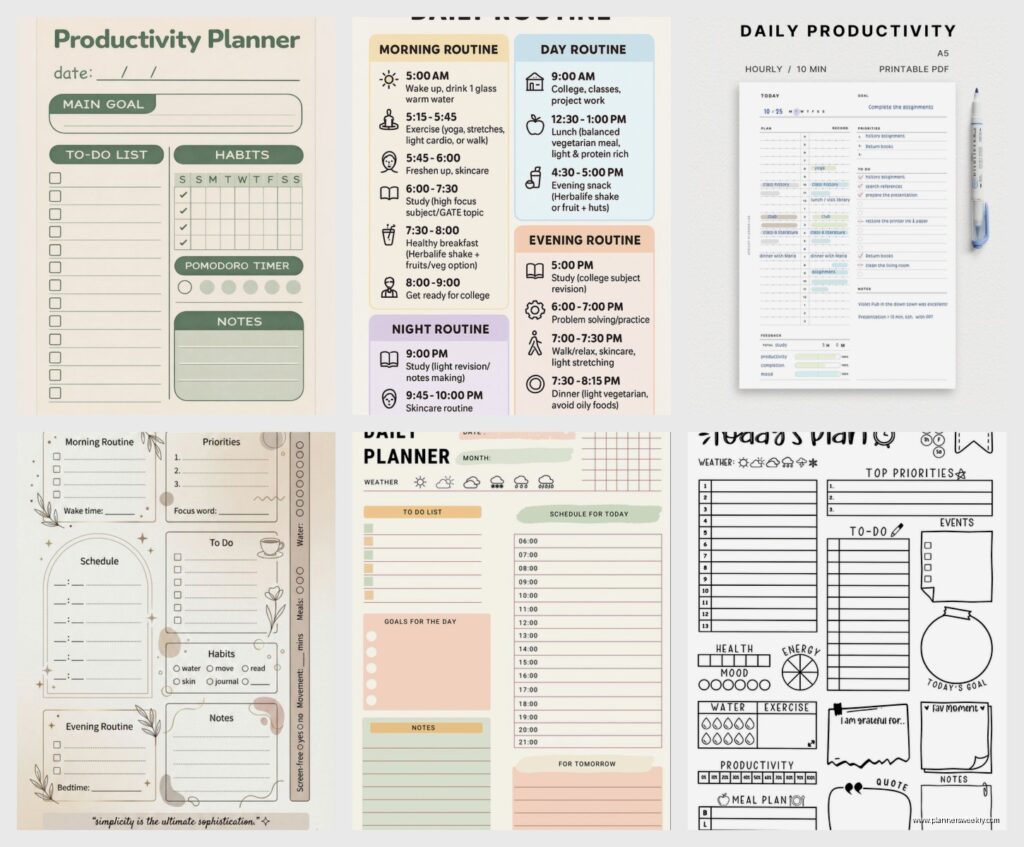
If you’re gonna make your own system in a regular notebook or print pages, here’s what actually needs to be on there based on what worked:
- Date at the top (obvious but I’ve forgotten before)
- Top 3 priorities – non-negotiables for the day
- Time blocks if you schedule stuff – I do 90-minute blocks not hourly because that’s more realistic
- Running task list for smaller stuff
- Notes section for random thoughts so they don’t clutter your tasks
- End of day review – what got done, what didn’t, why
I made a template in Google Docs that I print on regular printer paper and clip into a small binder. Cost me basically nothing except ink. Works exactly the same as the $30 planners for my purposes honestly.
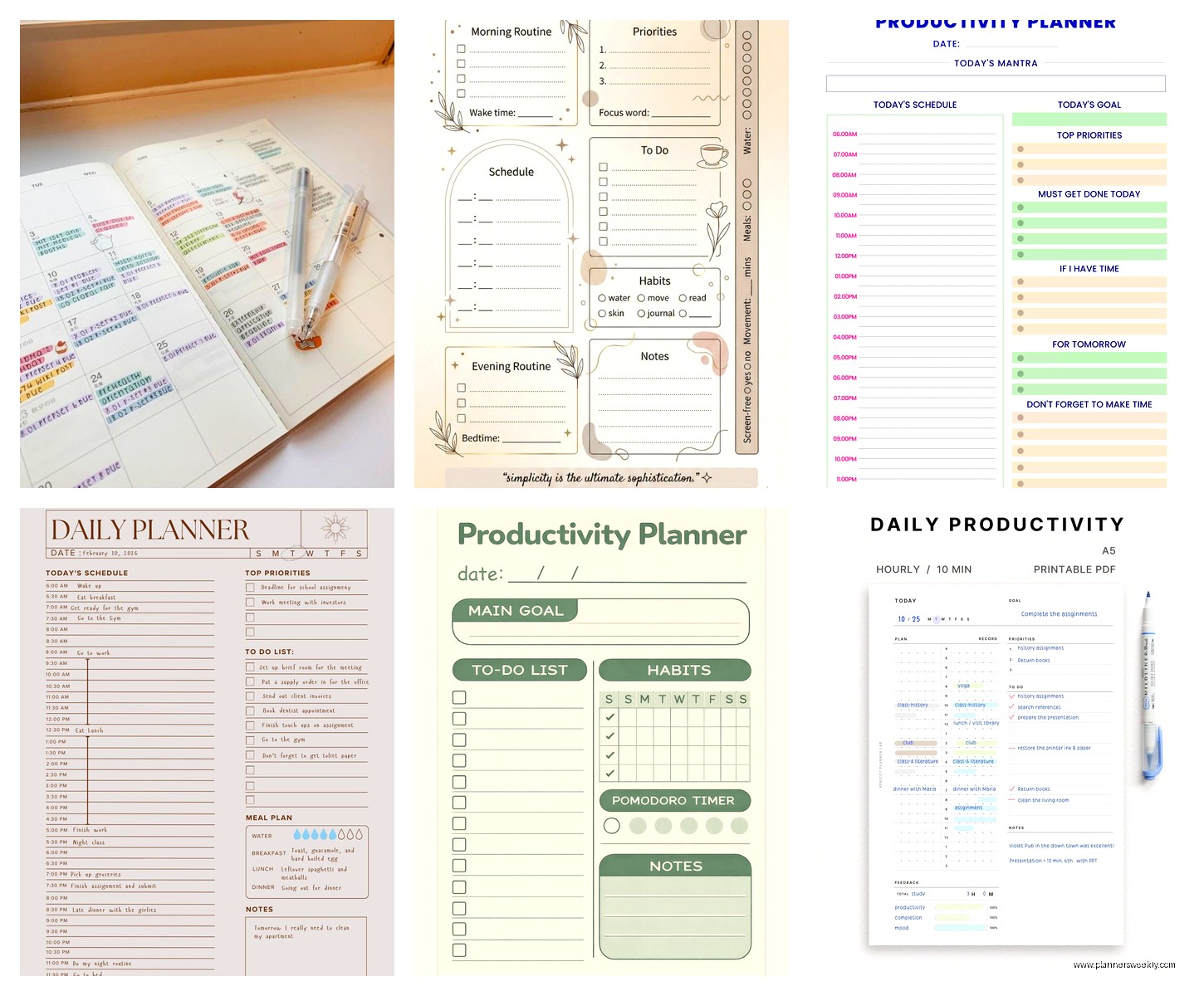
The Ink+Volt daily planner has a similar layout but adds a focus word and schedule section. It’s pretty and the paper quality is genuinely excellent – I tested it with like eight different pens including fountain pens and no bleed through. But it’s another $30 situation and you’re locked into their format.
What actually matters more than the system
This is gonna sound preachy but whatever – the planning method matters way less than doing it consistently at the same time. I tested planning at night versus morning and morning won by a lot for me. Takes maybe ten minutes with coffee before I check email or messages.
Evening planning left me anxious about the next day and I’d wake up already stressed. Morning planning meant I could adjust for how I actually felt and what fires popped up overnight.
My client Rachel does the opposite though – plans every evening and says it helps her sleep better knowing tomorrow is handled. So test both and see what doesn’t make you wanna skip it.
The hybrid approach that’s working right now
Okay so funny story, I ended up combining methods because I’m apparently incapable of just picking one thing. Digital task manager (I stuck with Todoist) for capturing everything and recurring stuff. Paper daily page for the actual daily plan and focus.
Every morning I open Todoist, look at what’s due, pick my top 3, and write those plus time blocks on paper. Cross stuff off paper throughout the day because that hit of dopamine from physical crossing out is unmatched. Then update digital at end of day so nothing gets lost.
It sounds like extra work but it takes literally 5 minutes total and keeps the benefits of both. Digital doesn’t let stuff fall through cracks. Paper keeps me focused on today instead of drowning in my entire task backlog.
Specific recommendations based on your situation
If you’re starting from zero structure – get the Panda Planner or Full Focus. The guided format will build the habit better than a blank page. Panda is better if you want flexibility, Full Focus if you need strict time blocking.
If you already journal or bullet journal – just add a daily planning spread to what you’re doing. The Bullet Journal Method book has solid templates. Don’t buy a separate planner, you won’t use both consistently.
If you’re digital-native and paper feels like a chore – Todoist for simple task management or Sunsama if you want hand-holding and have the budget. Both have good mobile apps so you can update anywhere.
If you have ADHD or similar executive function stuff – time blocking in Full Focus or Sunsama helped my clients with ADHD way more than open lists. The visual schedule creates external structure. Also the Pomodoro technique built into some apps (Focus Keeper is free) pairs well with any planning system.
Things that seemed helpful but actually weren’t
Habit trackers on the daily page just made me feel bad when I missed stuff. Moved those to monthly spreads instead. Daily affirmations or quote sections are wasted space unless that’s genuinely your thing – it’s not mine.
Super detailed hourly schedules stressed me out. Life doesn’t work in perfect hour chunks and when things ran over I felt behind all day. The 90-minute block thing I mentioned earlier came from Deep Work and actually matches how focus works better.
Separate work and personal planners. I tried this because it seems professional but you end up checking both constantly and stuff falls through. One daily page with everything mixed is more realistic for how life actually happens.
The paper quality thing since people ask
If you’re using fountain pens or heavy ink, paper matters. Panda Planner has okay paper but shows some ghosting. Full Focus and Ink+Volt are better. Leuchtturm for DIY is excellent. Moleskine weirdly isn’t great despite the price – feathering issues with most pens.
For regular ballpoint or gel pens literally any of them work fine. Don’t let paper quality stop you from starting if you’re just using whatever pen is nearby.
How to actually stick with it
Pair it with something you already do daily. I do planning with my first coffee which means it happens because coffee definitely happens. Friend of mine does it right after lunch. Another does it during her commute home (she takes the train, not driving obviously).
Keep it visible. My planner lives on my desk open to today’s page. When it was in a drawer I forgot about it for days at a time. Digital reminders help too – I have a 9am notification that just says “plan” on days I might forget.
Don’t try to plan perfectly. Some days my daily page is a mess of crossed out items and arrows and notes in margins. It still worked better than no planning. The aesthetic planning you see on Instagram isn’t real daily use, it’s content.
Oh wait, templates you can find online – Passion Planner has free PDF downloads of their daily format. Print those and test before buying the full planner. Productivity Game on YouTube has templates too that are pretty solid and free.
The government productivity method my client who works for the Department of Whatever told me about uses a simple ABC priority system on a legal pad and honestly works great if you don’t want any special supplies. A tasks are critical today, B tasks are important this week, C tasks are whenever. Only work on As until they’re done. Costs zero dollars.
I think that covers most of what actually helped versus what just looked nice or sounded good in theory. Test stuff for at least a week before deciding because day one always feels either amazing or terrible and neither is accurate. The real test is day five when the novelty is gone and you’re tired and still gotta plan your day anyway.
