
Digital Productivity, Online planners, Planners
12 Month Planner: Best Annual Planning Options
Apr
Okay so I just spent like three weeks testing basically every 12-month planner format because honestly I was tired of recommending stuff I hadn’t personally used, and here’s what actually matters when you’re picking one.
The Basic Decision That Actually Changes Everything
First thing – you gotta figure out if you want dated or undated because this literally determines which half of the planner universe you’re shopping in. Dated planners are January through December (or academic year if you go that route), and undated you just fill in the dates yourself. I thought undated would be more flexible but honestly? I kept forgetting to fill in the month headers and then I’d have these weird gaps where I just… didn’t plan for two weeks because it felt like too much work to catch up.
The Paperblanks 12-month planners are dated and they’re gorgeous but kinda heavy. Like I tested their Embellished Manuscripts collection last month and my bag was noticeably heavier. The paper quality though – it’s that 120gsm stuff that doesn’t bleed even with my fountain pens which is basically my whole personality at this point.
Layout Formats Because This Is Where People Mess Up
So there’s weekly, daily, monthly, and these weird hybrid things. Daily planners give you a full page per day – sounds amazing until you realize that’s 365 pages and the thing weighs like a brick. I used a Leuchtturm1917 daily for exactly three weeks before I accepted I’m not that person.
Weekly layouts are where most people should actually start. You get the whole week visible at once which my brain needs because I’m constantly moving things around. The vertical weekly layout (where days are in columns) versus horizontal (days stacked) is a personal preference thing but I’m gonna be honest – vertical works better if you time-block, horizontal if you just list tasks.
Oh and another thing – some weeklies have the weekend squished into one column and that drives me absolutely nuts if I work Saturdays which I do probably half the time.
Monthly Spreads That Don’t Suck
Every 12-month planner has monthly calendar views but the quality varies SO much. The Erin Condren LifePlanner has these monthly spreads with tons of room in each date box – I can actually write my client meetings AND personal stuff without abbreviating everything into incomprehensible code.
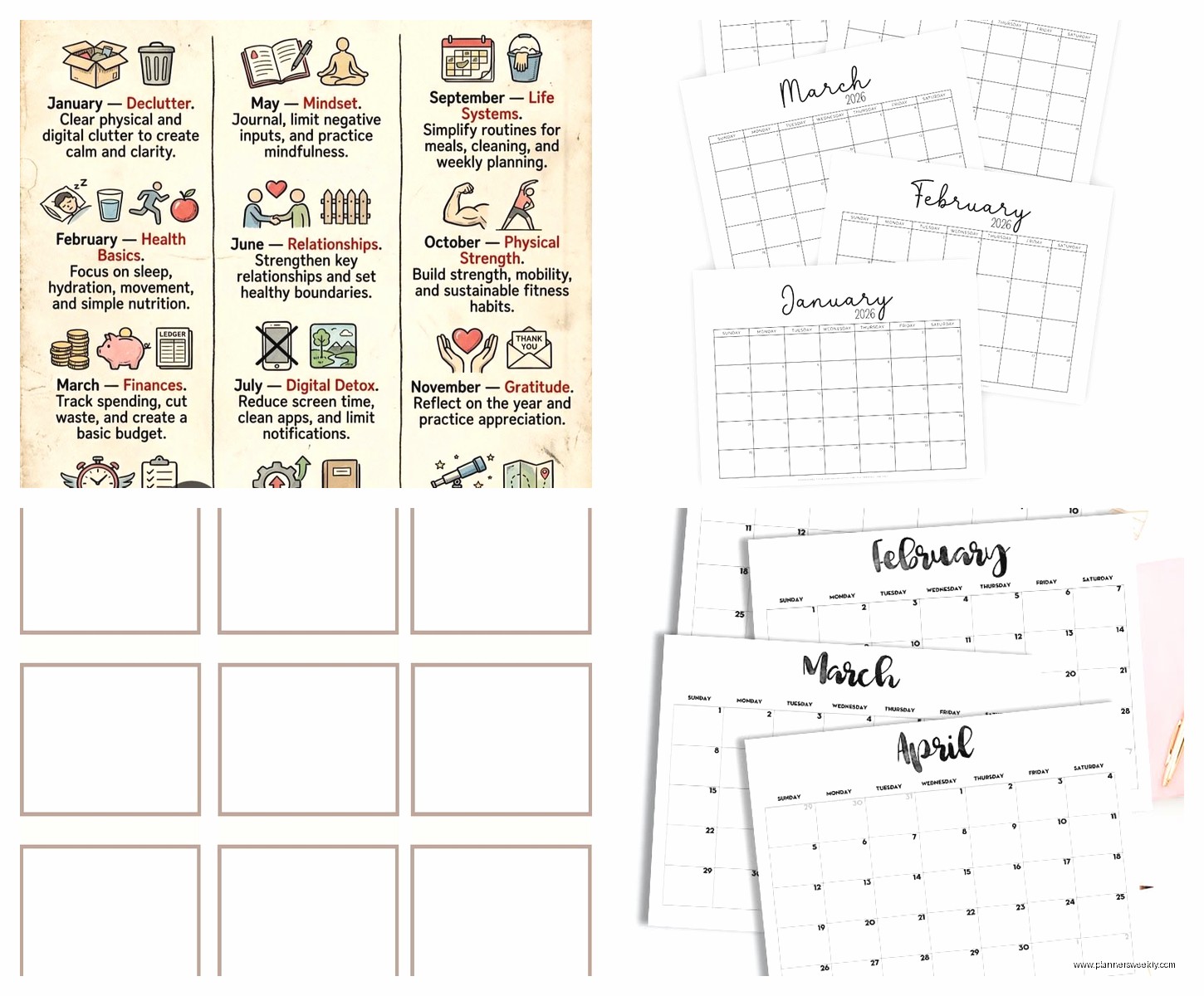
Blue Sky planners are cheaper (like $20-30 range) and their monthly views are clean but the boxes are smaller. Fine if you’re just tracking appointments, annoying if you’re trying to see your whole life at a glance.
The Ones I Actually Recommend After Testing
Okay so funny story – my dog knocked my coffee onto three different planners last Tuesday and I discovered which ones have actually water-resistant covers versus just saying they do. The Moleskine hardcover survived completely fine, the cheaper Target one did not.
Moleskine 12-Month Weekly Notebook
This is like the standard everyone compares everything to. Comes dated, weekly layout on the left page with blank notes on the right. The paper is thin (70gsm) so fountain pens will ghost through but ballpoint and gel pens are fine. It’s the most boring reliable option and sometimes that’s exactly what you need. Around $25-30 depending on size.
The elastic closure actually stays tight unlike some planners where it gets loose after a month. Ribbon bookmark is standard Moleskine quality. It’s not exciting but it works and you can find it literally anywhere.
Passion Planner
Wait I forgot to mention – if you’re into goal-setting frameworks the Passion Planner has this whole system built in. Each month starts with a reflection page and roadmap section. Weekly spreads have a priorities box and hourly time slots from 7am to 9pm.
I tested this for eight months straight and the structure really does help if you’re the type who needs prompts. But if you just want blank space to write stuff, all those pre-printed sections might annoy you. The paper is 80lb which is decent, handles most pens well. They do dated and undated versions, academic and regular year.
Price is around $35 but they often have sales. Comes in compact (5.8 x 8.25) and full size (8.5 x 11) – I prefer compact because the full size doesn’t fit in most bags.
Erin Condren LifePlanner
This is gonna sound weird but I avoided this for years because the Instagram aesthetic people use it and I assumed it was all style no substance. Wrong. The coil binding lays completely flat, the paper is thick (100lb cover, 80lb interior), and there’s actually room to write.
You can customize the cover and layout when you order which is cool but also overwhelming – there’s like 47 options. Go with vertical weekly if you’re not sure. The monthly calendar has full-size boxes and there’s note space at the bottom of each week.
Downside: expensive. Like $55-70 depending on what you customize. Also the coils snag on stuff in your bag sometimes. But it genuinely holds up for 12 months of heavy use – mine from last year is beat up but totally functional still.
Budget Options That Don’t Feel Cheap
Blue Sky makes planners in the $15-25 range that are actually pretty solid. I tested their Bakehouse collection (because the covers are cute and that matters to me apparently) and was surprised by the quality. Twin-wire binding, thick covers, decent paper that handles gel pens fine.
The layouts are straightforward – monthly calendars and weekly spreads without a ton of extra sections. If you just need something functional without paying premium prices, this is it. Target and Amazon both carry them.
AT-A-GLANCE planners are the boring office supply option but they’re reliable and cheap. Like $12-20 cheap. Paper quality is whatever but they work. I keep one as a backup planner honestly.
This Is Gonna Sound Weird But Size Actually Matters
I didn’t think planner size would matter much and then I bought a full-size (8.5 x 11) planner and literally never took it anywhere because it didn’t fit in my normal bag. Now I’m stuck with this beautiful planner that lives on my desk only.
Most planners come in a few sizes – compact/personal (around 5 x 8), medium (around 6 x 9), and full/letter size (8.5 x 11). Think about where you’ll actually use it. Desk only? Full size gives you tons of space. Carrying it everywhere? Compact or medium.
The Hobonist Techo is this Japanese planner that’s super slim and fits in like every bag – it’s barely thicker than a passport. But the pages are tiny so you gotta be okay with small handwriting. I used it for three months while traveling and it was perfect for that but too cramped for normal life.
Features That Sound Gimmicky But Are Actually Useful
Okay so I used to think perforated pages were pointless until I needed to tear out a week to share with a colleague and it actually worked cleanly. Some planners have tear-out shopping lists or note pages – I use these way more than I expected.
Pockets in the back cover – essential. Where else are you gonna put receipts and sticky notes and that business card from the person you met at the coffee shop? The Panda Planner has like three different pockets which seems excessive but I fill all of them somehow.
Sticker sheets that come with planners are usually whatever but the Erin Condren ones are actually functional – little dots for marking stuff, headers for different categories. I’m not a sticker person generally but I use these.
Binding Types and Why You Should Care
Spiral/coil binding lays flat which is amazing but snags on everything. Hardcover bound planners look professional but you gotta hold them open or they close on you – so annoying when you’re trying to write. Disc binding (like the Happy Planner system) lets you remove and rearrange pages which is cool if you’re into customizing but the discs are bulky.
My client canceled yesterday so I spent an hour comparing binding types side by side and honestly? Coil binding won for pure functionality. The Erin Condren and Blue Sky coils are sturdy enough they don’t snag as much as cheap spiral notebooks.
The Fancy Options If You Wanna Treat Yourself
Hobonichi planners are like the cult favorite in planner world. They’re Japanese, use Tomoe River paper that’s super thin but doesn’t bleed, and have this devoted following. The Cousin is their 12-month option with a page per day.
I tested one for two months and the paper is legitimately amazing – you can use any pen including fountain pens and markers. But the layout is very specific with time slots and grid sections, so if that’s not your style it might feel restrictive. Around $40-50 plus shipping from Japan usually.
Baron Fig Confidant has yearly and weekly planners that are minimal and beautiful. Like if Apple made a planner it would look like this. The paper is 100gsm, lays flat when open, and the design is super clean without a bunch of decorative stuff. I’m using one right now actually and it’s my favorite for looking professional in meetings.
Price is around $28 which isn’t terrible for the quality. Only comes in one layout though – weekly horizontal with notes section.
Academic Year Planners Because Some Of Us Live That Life
If you need August to July instead of January to December, your options are actually pretty good. Most major brands (Erin Condren, Passion Planner, Blue Sky) make academic versions.
The Simplified Academic Planner by Emily Ley is popular with teachers – has lesson planning sections and class period layouts built in. I tested it even though I’m not a teacher and the structure worked fine for coaching sessions and client blocks. Around $50.
What Nobody Tells You About 12-Month Planning
Okay real talk – that first month you’re gonna be super motivated and fill everything in perfectly. Month three you’ll start slipping. Month six you might abandon it for two weeks and feel guilty.
This is normal and doesn’t mean you picked the wrong planner. I’ve gone through probably 30+ planners over the years and this happens with all of them. The trick is picking one that’s easy to jump back into – simple layouts work better for this than complex systems with a million sections to maintain.
Also consider if you actually need 12 months all at once. Some people do better with quarterly planners they replace every three months – keeps it fresh, lets you switch formats if something isn’t working. But if you’re tracking long-term projects or need to see the whole year, a true 12-month planner is worth it.
Digital Versus Paper Because Someone Always Asks
Look I’m a productivity coach who tests both and honestly they serve different purposes. Digital is better for stuff that changes constantly, has reminders, or needs to sync across devices. Paper is better for planning, thinking, and actually remembering what you wrote down.
I use both – digital calendar for appointments because those need reminders, paper planner for task management and project planning. The 12-month paper planner gives me that overview I need to see patterns and plan ahead in a way scrolling through a digital calendar never does.
If you’re trying to decide between them, the paper planner is probably better for annual planning specifically. There’s something about writing out your year and being able to flip through months quickly that works better on paper.
My Actual Current Setup After Testing Everything
Right now I’m using a Baron Fig Confidant for daily/weekly planning and a separate Leuchtturm1917 bullet journal for monthly overviews and collections. Is this extra? Yes. Does it work better than trying to make one planner do everything? Also yes.
The Baron Fig has my week-to-week tasks and appointments. The bullet journal has my monthly calendar spreads, project lists, and random notes. I tried combining everything into one 12-month planner with all the sections and it was too cluttered.
But that’s me after years of testing – if you’re just starting out, get one good 12-month planner with weekly and monthly views and see how you actually use it before investing in multiple systems.
Oh and another thing – don’t buy a bunch of planner accessories right away. The washi tape and sticker collections and fancy pen loops can wait until you know what you’ll actually use. I have a drawer full of planner stuff I bought enthusiastically and never touched again.
