Digital Productivity, Online planners, Planners
Free Online Timetable Maker: Best Scheduling Tools
Apr
Okay so I just spent like three weeks testing every free timetable maker I could find because one of my coaching clients needed something fast and I realized I had no good answer for her, which was embarrassing honestly.
Canva’s Timetable Templates Are Surprisingly Good
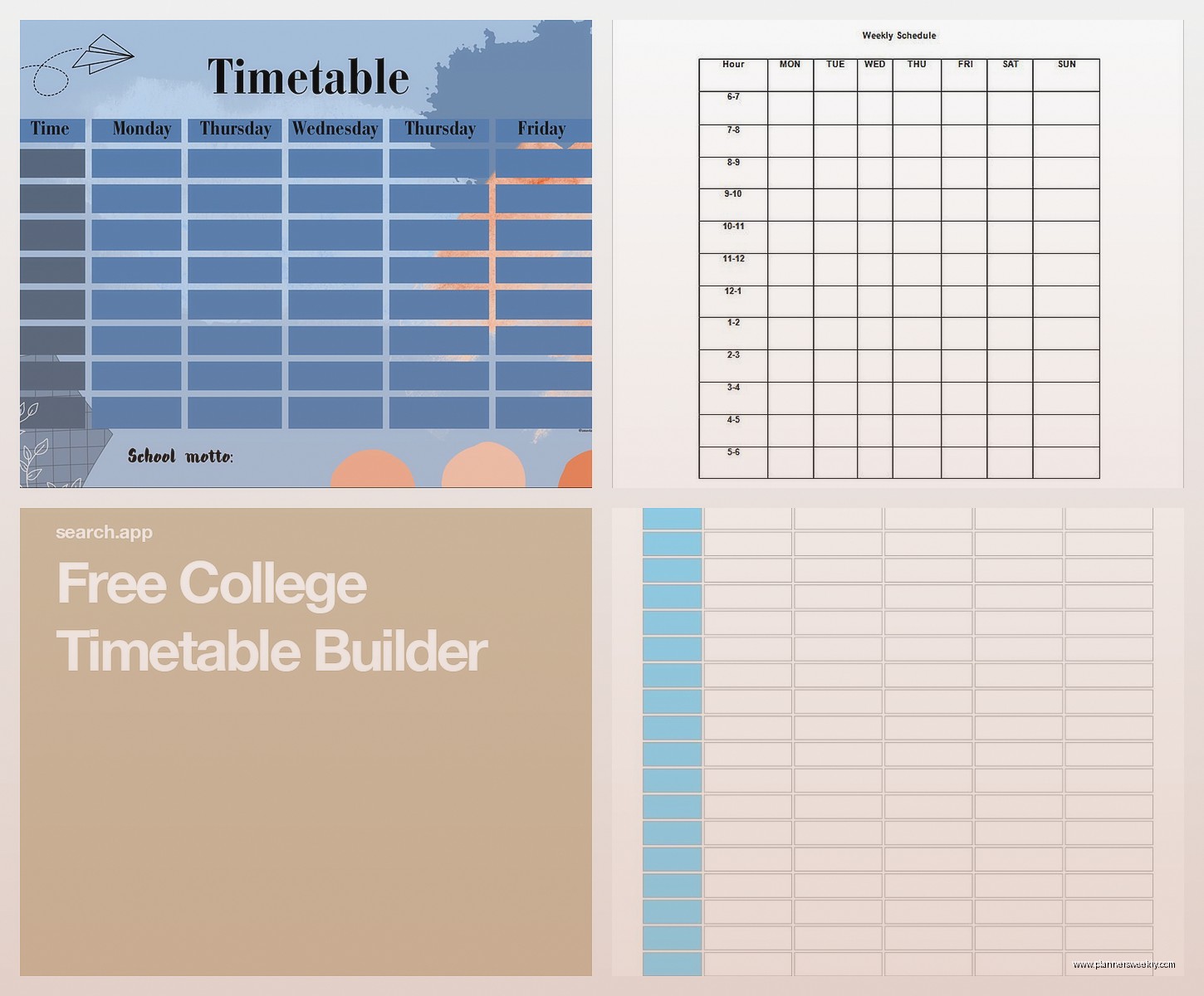
Started with Canva because I was already in there making Instagram graphics and just searched “timetable” on a whim. They’ve got probably 50+ free templates and here’s what surprised me – they’re actually functional, not just pretty. Like I made a whole weekly schedule for my daughter’s homework routine in maybe 15 minutes, and you can customize literally everything. Colors, fonts, add little icons if you’re into that.
The drag-and-drop thing works smoothly which matters more than you’d think. I tested one tool last week where dragging items felt like moving furniture through mud, just awful. Canva lets you duplicate elements too, so if you have recurring tasks you’re not retyping “Team Meeting” seventeen times.
Downside is it’s not dynamic at all. You’re basically making a pretty PDF or image. Can’t sync it anywhere, no notifications, nothing automated. But if you just need something to print and stick on your wall or share as an image? Honestly perfect for that.
Google Sheets Template Gallery Has Hidden Gems
Wait I forgot to mention Google Sheets templates because everyone overlooks them. Go to Google Sheets, click Template Gallery, there’s a whole section for schedules. The basic timetable template looks boring as hell but it’s SO customizable once you get in there.
I made a content calendar for my blog using their weekly schedule template and added conditional formatting so overdue tasks turn red automatically. Took maybe 20 minutes to figure out but now it actually helps me stay on track. You can share it with other people and they can edit in real-time which is huge if you’re coordinating schedules with teammates or family.
The learning curve is real though. Like if you’ve never used formulas in Sheets you’re gonna spend time on YouTube tutorials. My cat knocked over my coffee right in the middle of setting up a formula and I lost like 30 minutes of work because I forgot to let it auto-save, so there’s that.
Why I Keep Coming Back to It
It’s free forever, no premium upsells constantly in your face. Works on phone, tablet, computer, whatever. And you can export to Excel or PDF if you need to. The flexibility is unmatched honestly – you can turn it into basically any kind of schedule you want if you’re willing to tinker.
Notion’s Database Views Changed My Mind
Okay so funny story, I resisted Notion for like two years because it seemed too complicated and everyone who used it wouldn’t shut up about it. But for timetables specifically? The database features are actually incredible.
You create one database with all your tasks or classes or whatever, then you can view it as a calendar, a table, a timeline, a board… all from the same data. So I have my weekly coaching sessions in there and I can see them as a traditional timetable grid OR switch to calendar view when I need to see the whole month.
The templates in Notion are hit or miss. Some are overcomplicated with like fifty properties you don’t need. I started with their “Class Schedule” template and stripped out probably 70% of it. But once you get it set up how you want, it’s really powerful.
The Actual Learning Curve
Not gonna lie, Notion takes time to learn. I watched probably four hours of YouTube tutorials before I felt comfortable. But the free version gives you basically everything – they removed the block limit so you’re not constantly hitting walls. You can share pages with unlimited people too.
Best for people who want one tool to rule them all, not just a simple timetable. Like I have my schedule, my notes, my article drafts, all in Notion now. But if you just want a quick weekly schedule and nothing else, it’s overkill.
Visme Surprised Me for Visual Timetables
This is gonna sound weird but I found Visme while looking for infographic tools and realized they have timetable templates. The free plan gives you five projects which is limiting, but the templates themselves are gorgeous if you need something presentation-ready.
I made a schedule for a workshop I was running and it looked so professional that people asked what designer I hired. Takes maybe 30 minutes to customize because the interface is pretty intuitive – similar to Canva but with different template styles.
The catch is you can only download as low-res on the free plan unless you want their watermark. Fine for digital sharing, not great if you want to print a huge poster. Also you can’t collaborate in real-time like you can with Google tools.
TimeTable Plus for Actual Academic Schedules
If you’re specifically doing school/university timetables, TimeTable Plus is purpose-built for that. I tested it for a client who teaches high school and she’s still using it six months later which says something.
You input your courses, time slots, rooms, teachers – whatever applies – and it generates a visual timetable. Color-codes everything automatically. Can handle rotating schedules which is huge for schools with A/B week systems or whatever.
Free version limits you to two timetables I think? And you’ll see ads. But it exports to PDF and prints cleanly which matters for actual classroom use. The mobile app syncs too so students can check their schedule on their phones.
Not useful if you’re not doing academic scheduling though. Like I tried to use it for my regular work schedule and it just felt clunky because it’s so specialized.
My Actual Recommendation Depends on Your Situation
Okay so here’s what I tell people when they ask me which one to actually use:
If you just need something quick to print: Canva, hands down. Pick a template, customize it in 10 minutes, download, done. I use this for my daughter’s chore chart and it works perfectly.
If you’re coordinating with other people: Google Sheets. The collaboration features and real-time editing are unbeatable at the free tier. My productivity coaching group uses a shared Sheet for our meeting schedule.
If you want it integrated with everything else: Notion, but commit to the learning curve. I spent a whole Saturday just watching tutorials while my husband watched football, and now it’s my main system for basically everything.
If you need something specifically for classes/courses: TimeTable Plus. Don’t overthink it, just use the tool designed for exactly that purpose.
If you need it to look really polished for presentations: Visme, but know you’re limited to five projects on free.
The Features That Actually Matter
After testing like twelve different tools, here’s what I realized actually matters versus what sounds good but doesn’t:
Recurring events: Huge timesaver. If you’re manually entering “Team Standup” every single Monday at 10am you’re wasting your life. Google Sheets lets you copy-paste easily, Notion has repeat settings, some tools don’t handle this well at all.
Color coding: Sounds basic but it’s the difference between a timetable you can scan in two seconds versus one where you’re squinting trying to find things. Every tool I mentioned does this, but the implementation varies wildly.
Mobile access: I thought I didn’t care about this until I was at a coffee shop trying to check my schedule and couldn’t access the timetable I’d made in some random web tool I’d already forgotten the name of. Canva, Google Sheets, and Notion all have solid mobile apps.
Export options: Being able to get your timetable OUT of the tool matters more than you think. What if the tool shuts down or changes their pricing? I always test PDF export before committing to anything.
Things I Thought Would Matter But Don’t Really
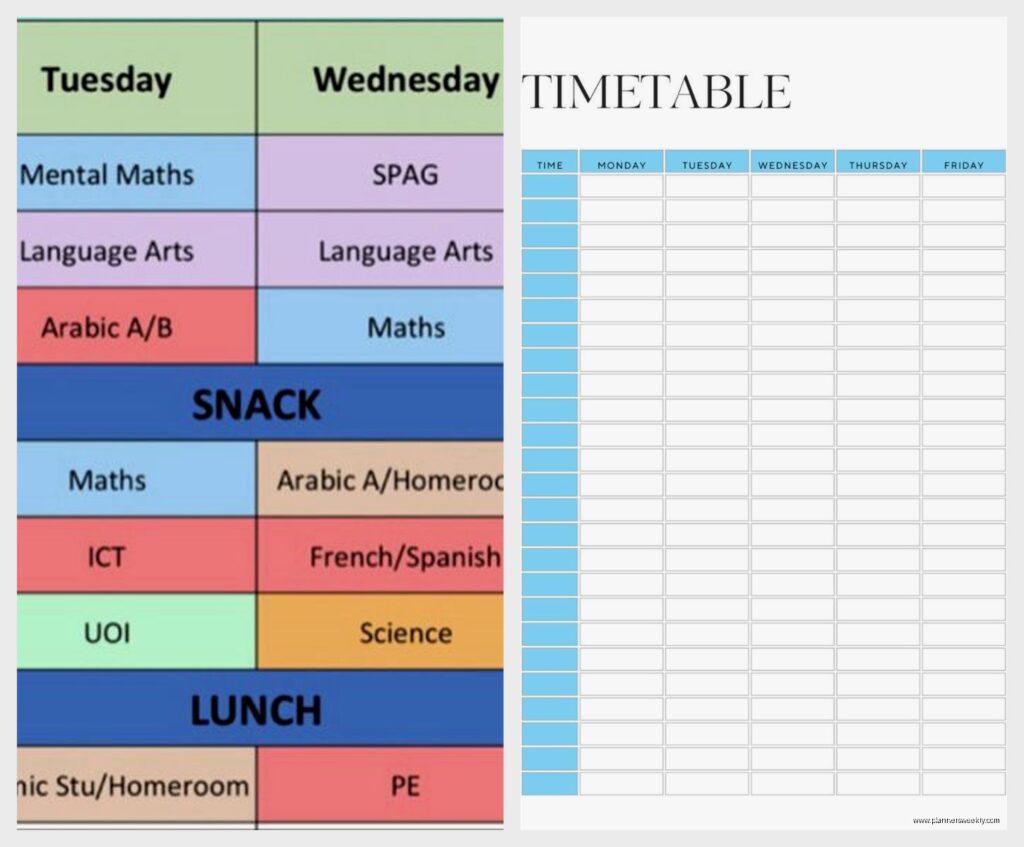
Templates – like yeah they’re nice but honestly most timetable templates are basically the same grid with different colors. I spent way too much time comparing templates when I should’ve just picked one and started filling it in.
Integrations with other apps – sounds cool to sync your timetable with your calendar and your task manager and your whatever else, but in practice it gets messy fast. I tried syncing a Notion timetable with Google Calendar and ended up with duplicate events everywhere. Sometimes simpler is better.
What About the Paid Versions
I tested free versions exclusively because that’s what most people actually need, but I’ve used paid versions of some of these for other purposes. Canva Pro is worth it if you’re making lots of graphics anyway, but not just for timetables. Notion’s paid tiers add collaboration features that teams might need but solo users don’t.
The thing is there are genuinely good free options now, like better than the paid options from five years ago. Unless you have really specific enterprise needs, you probably don’t need to pay for timetable software.
The Setup Time Reality Check
Canva timetable: 10-20 minutes depending on how picky you are about colors
Google Sheets: 30-60 minutes if you want formulas and formatting, 15 minutes for basic
Notion: honestly like 2-4 hours to really learn it, then 30 minutes per timetable after that
Visme: 20-30 minutes
TimeTable Plus: 15-30 minutes once you understand the input system
I always tell my coaching clients to block actual time for setup. Don’t try to build your timetable system during your lunch break, you’ll get frustrated and quit halfway through.
Oh and another thing – start simple. I see people trying to build these elaborate color-coded systems with seventeen categories and custom icons and then they abandon it after a week because it’s too much maintenance. My most-used timetable is literally a Google Sheet with times in one column, tasks in the next, and three color options. That’s it.
Mobile Apps vs Web Tools
Most of these work better on desktop for initial setup but need to work on mobile for daily use. I do all my timetable building on my laptop because typing on a phone is annoying, but I check them constantly on my phone throughout the day.
Notion’s mobile app is really good now, used to be terrible. Canva’s app works fine for viewing but editing on mobile is fiddly. Google Sheets mobile is… functional? The cells are small but it works.
If you’re someone who’s always on mobile, maybe look at apps designed mobile-first, but honestly those usually have worse free tiers. The web tools I mentioned all have acceptable mobile experiences.
One thing nobody tells you – test how your timetable looks on your actual phone before you commit to it. I made this beautiful detailed schedule in Visme and it was completely unreadable on my phone screen because the text was too small. Had to rebuild the whole thing with bigger fonts.