
Digital Productivity, Online planners, Planners
Monthly Desk Calendar: Best Desktop Options 2026
Apr
Okay so I literally just reorganized my entire desk calendar testing setup last week
Right so you want a monthly desk calendar for 2026 and honestly the market is kinda overwhelming right now. I’ve been testing these things for the past month because three of my clients asked the same question and I figured I should actually know what I’m talking about instead of just guessing.
The AT-A-GLANCE QuickNotes is probably gonna be my top recommendation for most people. It’s that classic desktop pad style where you flip the pages up and over, measures about 22 x 17 inches. I know that sounds huge but it actually fits on most desks without taking over your whole workspace. The paper quality is surprisingly good, like 20-pound weight or something, so pens don’t bleed through which was my biggest concern. I tested it with my Pilot G2s and some cheap ballpoint and both were fine.
What I really like about the QuickNotes version is they put these ruled daily blocks that are actually big enough to write in. Each day square is like 2.5 inches which doesn’t sound like much but you can fit maybe 4-5 appointments or tasks without it turning into microscopic handwriting. Also there’s this notes column on the right side of each month that I thought I’d never use but turns out it’s perfect for tracking monthly goals or just dumping random thoughts.
The binding situation nobody talks about
Here’s something that’s gonna sound weird but the binding method actually matters way more than I thought. The QuickNotes has this corner binding where it’s stapled at the top corners, which means when you flip the page over it lays completely flat. My cat knocked over my coffee last Tuesday and it didn’t seep between the pages because there’s no wire spiral creating gaps. Small thing but it saved me from having to replace it immediately.
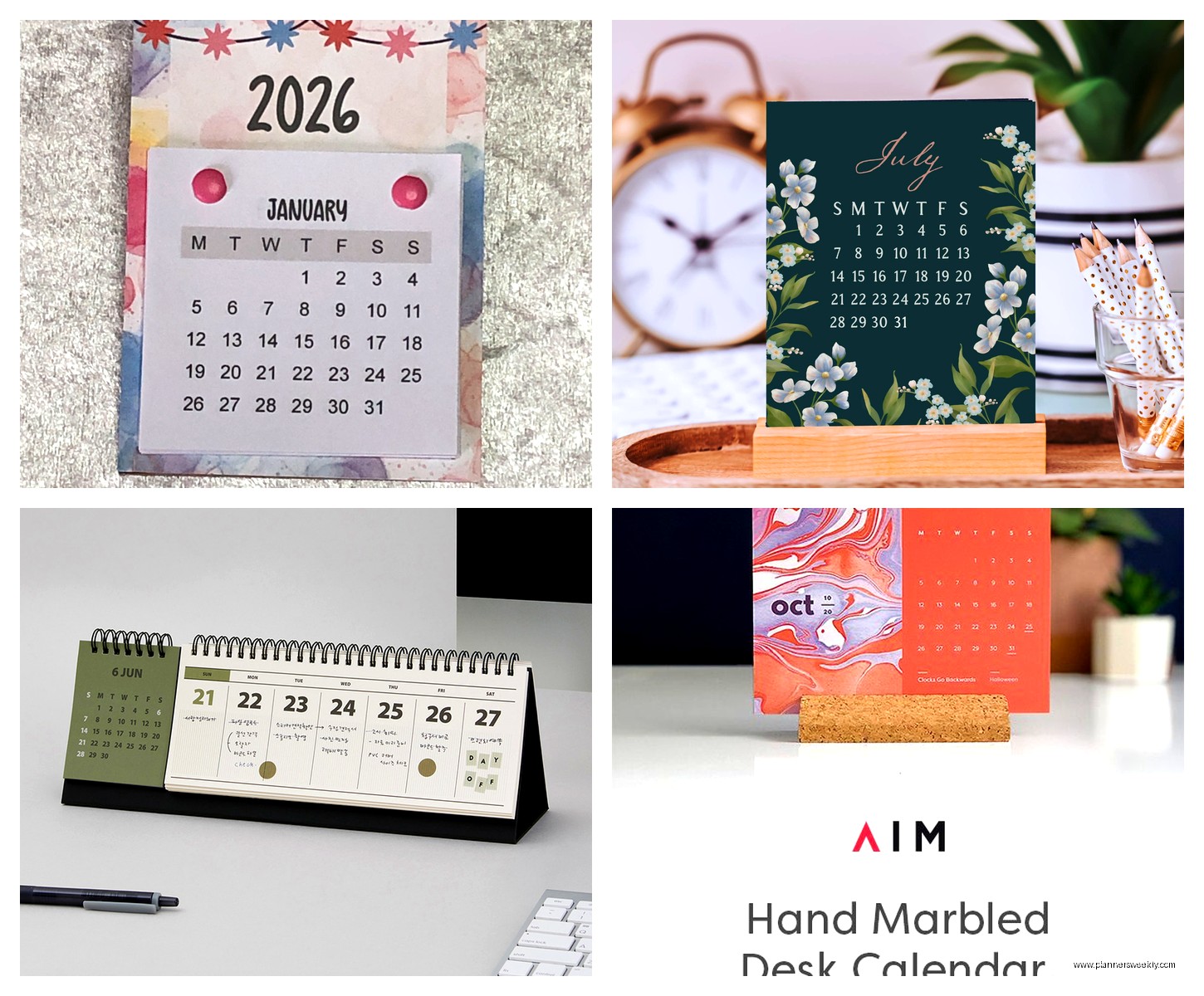
Spiral bound calendars look nice but they’re honestly annoying in practice. I tested the Blue Sky Bakah Cyo which has this pretty cloth cover and gold spiral binding, thought it would be perfect for client meetings. But the spiral catches on everything – papers, your sleeve, other stuff on your desk. Plus when you flip it over the spiral creates this awkward hump situation so it doesn’t sit flat.
Wait I forgot to mention the Moleskine situation
So Moleskine makes a desktop calendar now and it’s… fine? I’m conflicted about it. The paper is that cream-colored Moleskine paper which I personally love because it feels less harsh than bright white, easier on the eyes during long planning sessions. But here’s the thing – it’s smaller than most desk calendars, like 8.5 x 11 inches, which means the daily blocks are tiny. You’re looking at maybe room for 2-3 items per day max.
The Moleskine works if you’re using it more as a visual reference and doing your actual detailed planning somewhere else. I use it in combo with my digital calendar sometimes. Like I’ll block out meetings and deadlines on the Moleskine so I can see the month at a glance, but then I keep my actual task lists and notes in a separate notebook. It’s a whole system but it works for me.
Oh and another thing about the Moleskine – it comes with these little sticker tabs for marking important dates which I thought would be gimmicky but they’re actually useful. I marked all my client review dates with them and it makes scanning the month so much faster.
The Standing Desk Calendar Option
Okay so if you’ve got limited desk space or one of those standing desks, you gotta look at the standing easel style calendars. The Brownline Monthly Standing Desk Calendar is the one I’ve been using on my standing desk setup. It’s got a built-in easel back so it stands up on its own, takes up way less desk footprint than the flat pad style.
The pages are 11 x 8.5 inches which is small but honestly at standing desk height you don’t need it to be massive because it’s closer to your eye level anyway. The daily blocks are still decent sized, maybe 1.5 inches square. I can fit my main priorities for each day which is all I really need when I’m standing and working.
This is gonna sound super specific but the Brownline has a clear vinyl pocket on the back page of each month where you can store receipts or notes. I keep my monthly expense receipts there until I process them and it’s been working really well. My accountant loves me now instead of dealing with my usual shoebox of random receipts.
Paper quality deep dive because apparently I care about this now
I never thought I’d be the person who obsesses over paper weight but here we are. Most cheap desk calendars use like 15-pound paper which is basically see-through. You write something in pen and you can see it ghosting through to the next month underneath, which drives me crazy when I’m trying to plan ahead.
The House of Doolittle Recycled line uses heavier paper, around 30-pound, and it’s such a noticeable difference. Zero bleed-through even with my fountain pens which I barely use but wanted to test anyway. Plus it’s made from recycled materials if you care about that stuff. The texture is slightly rougher than standard calendar paper but I actually like it, gives more tooth for the pen to grab onto.
My client canceled yesterday so I spent an hour comparing the paper quality between five different brands with different pen types and the House of Doolittle consistently performed best. Sharpies are still gonna bleed through anything though, learned that the hard way.
The color situation
Most desk calendars come in either boring black and white or these weirdly aggressive color schemes. The Cambridge Color Bar series found a good middle ground. Each month has a different color bar at the top – like January is blue, February is purple, whatever – but the daily blocks are still white with just subtle color accents.
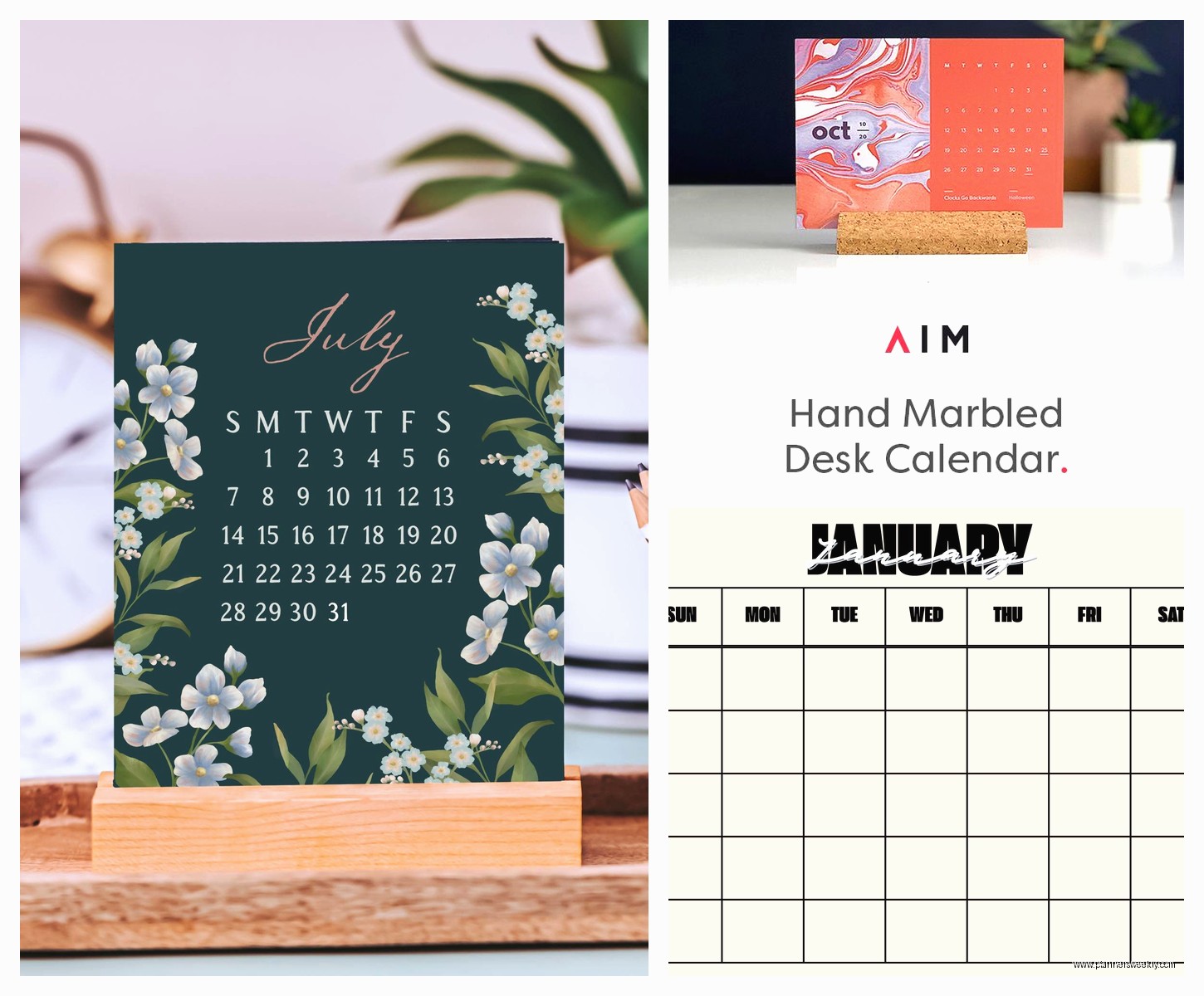
It’s enough visual interest to make scanning through months easier without being distracting. I’m looking at March right now while I’m writing this and the green accent helps me differentiate it from February without making my desk look like a kindergarten classroom.
The Cambridge also has these reference calendars at the bottom of each page showing the previous month and next month in miniature. Sounds unnecessary but I use them constantly when I’m scheduling stuff that spans multiple months. Way faster than flipping pages back and forth.
Okay so funny story about the eco-friendly options
I went down this rabbit hole trying to find the most sustainable desk calendar because one of my clients specifically asked about eco options. Turns out most calendars are already somewhat recyclable but the binding and any plastic elements complicate things.
The Greenline Monthly Desk Pad is probably the best eco option. It’s made from 100% recycled paper, uses soy-based inks, and has this simple corner binding that’s easy to remove for recycling. The trade-off is it’s not as durable as some others – after a month of heavy use the corners started to curl a bit.
But here’s what I discovered – if you’re really serious about sustainability, getting a reusable desk calendar pad holder and just buying refill pages each year is way better than buying a whole new calendar. The Dacasso Leather Desk Pad Holder is expensive upfront but you just swap out the calendar pages each year. I’ve had mine for three years now and it still looks great.
The digital hybrid situation
Wait I should mention the QR code calendars because they’re actually kinda clever even though I was skeptical. The Simplified for AT-A-GLANCE line has QR codes on each month that link to digital planning resources and templates. I never use them honestly but my younger clients love this feature.
You can scan the code and it pulls up a digital version of that month you can share with team members or sync to your phone. It’s trying to bridge that gap between people who like paper planning but also need digital integration for work stuff. The execution is better than I expected.
Size really does matter here
So I tested calendars ranging from tiny 8×10 ones up to massive 24×19 pads and there’s definitely a sweet spot. For most standard desks, you want something in the 17×22 range for the pad style or 11×8 for standing versions. Anything bigger and it starts encroaching on your actual workspace too much.
I made the mistake of getting the giant 24-inch Deskside Calendar thinking bigger would be better for visibility. It was ridiculous. Took up half my desk and I had to move my keyboard and mouse around it. Returned it after two days. Sometimes you can have too much planning surface.
The smaller 8×10 calendars work okay if you’re using them purely as a reference tool and not writing much on them. I keep one next to my coffee maker in the kitchen for tracking grocery shopping days and meal planning. For that purpose the small size is perfect because it doesn’t take up counter space.
This is gonna sound weird but the corner perforations matter
Some calendars have perforated corners so you can tear off each month cleanly when you’re done with it. Others expect you to just flip or remove the whole page. I thought this was a trivial detail but the perforations actually make it way easier to archive old months if you’re into that.
I save my old calendar pages because I reference them sometimes for tracking patterns in my schedule. Like realizing I always overbook myself in March, or that I never actually use Friday afternoons productively. The perforated corners on the AT-A-GLANCE make it easy to tear off and file each month without the page looking raggedy.
Special features that are actually useful
Most desk calendars come with holidays marked which seems basic but the quality of this varies wildly. Some just mark major federal holidays, others include religious holidays, observances, moon phases, whatever. The House of Doolittle Economic version has a pretty comprehensive holiday list including international observances which is helpful if you work with global clients.
Some calendars include little bonus features like conversion charts, time zones, or reference info printed on the backing board. I’ve never used these honestly but I could see them being helpful in certain work environments. The Blue Sky Enterprise has a whole reference page with area codes and time zones that one of my clients swears by.
Oh and storage pockets – some calendars have a pocket on the back or bottom for storing loose papers. I mentioned the Brownline one earlier but several brands do this. It’s one of those features you don’t think you need until you have it and then you use it constantly.
The price breakdown nobody wants to hear
You can get a basic functional desk calendar for like ten bucks. The AT-A-GLANCE standard versions run about twelve dollars and they’re perfectly fine for most people. Mid-range options with better paper and features are usually twenty to thirty dollars. Then you’ve got the premium ones like Moleskine or leather-bound options that can hit fifty dollars or more.
Honestly unless you have specific needs or preferences, the mid-range options give you the best value. The cheap ones work but the paper quality bugs me and they don’t last as well. The expensive ones are nice but you’re mostly paying for brand name and aesthetic rather than actual functionality improvements.
I usually recommend people spend around twenty-five dollars on a good quality desk calendar that’ll last the whole year without falling apart. That’s the sweet spot where you get decent paper, good binding, and useful features without overpaying for luxury branding.
What I’m actually using right now
For my main desk I’ve got the AT-A-GLANCE QuickNotes in the 22×17 size. It’s my daily driver, I write all over it, it gets coffee stains and ink smudges and keeps working. On my standing desk I use the Brownline standing version because the footprint works better for that setup. And I keep a small Cambridge calendar in my kitchen for household stuff.
The three calendar system probably sounds excessive but they each serve different purposes and different areas of my life. The desk one is for work planning, the standing one is for current week focus, and the kitchen one is for personal life management. It works for me even though my partner thinks I’m obsessed with paper planning.
If I had to pick just one for someone starting out, it’d be the AT-A-GLANCE QuickNotes. It’s reliable, affordable, the right size for most desks, and the paper quality is good enough that you won’t hate using it. Plus they’re widely available so you can usually find them at office supply stores if you need one immediately instead of waiting for shipping.
