
Digital Productivity, Online planners, Planners
Weekly Planner Notepad: Best Desktop Options
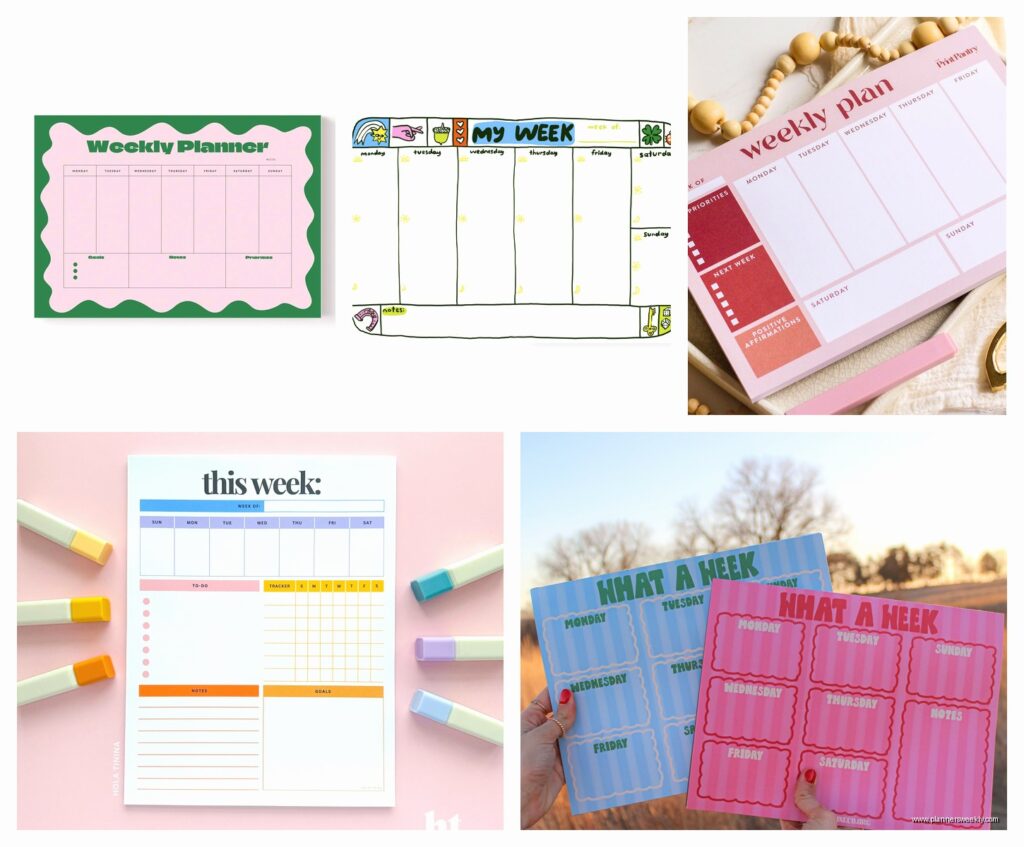
Apr
Okay so I’ve been testing desktop weekly planners for like three months now because honestly my clients kept asking and I figured I should actually know what I’m recommending instead of just saying “whatever works for you” which is basically useless advice.
The Ones That Actually Stay on Your Desk
First thing you gotta know is that most weekly notepads slide around your desk like they’re trying to escape, which is super annoying when you’re actually trying to use them. The Rifle Paper Co. weekly desk pad has this cardboard backing that’s thick enough to actually stay put, and the pages are this nice weight where your pen doesn’t bleed through even if you’re using those Pilot G2s that everyone loves but are kinda wet.
I tested this one for like six weeks straight and the only issue I had was my cat knocked my coffee onto it week three and I lost that whole page, but that’s on me for leaving coffee near paper. The layout is pretty straightforward with Monday through Sunday going vertically down the page, and there’s a notes section on the right that I actually use for my grocery list because… why not, it’s right there.
Size Actually Matters Here
The standard desk pad size is around 17 x 11 inches which sounds huge but honestly on a normal desk it’s perfect. I tried the smaller 8.5 x 11 notepads thinking they’d be more practical and yeah no, you run out of space by Tuesday if you have an actual job with meetings and stuff.
Blue Sky makes this weekly planner that’s 15 x 12 and it’s got this horizontal layout that I wasn’t sure about at first but then I realized it’s actually better if you have a wider desk setup. The days go across the top instead of down the side, so you can see your whole week without turning your head weird. Each day has hourly blocks from 7am to 7pm which is either perfect or totally useless depending on whether you actually schedule things by hour.
The Pretty Ones vs The Functional Ones
Okay so this is gonna sound weird but sometimes the prettiest planners are the worst to actually use. I bought this gorgeous floral one from a small shop on Etsy and the design was so busy I couldn’t read my own handwriting on it. Like the flowers were printed right where I needed to write important stuff.
That said, the Bloom Daily Planners weekly pad hits this sweet spot where it’s cute but not overwhelming. There’s a little quote at the top of each page which I normally find annoying but these are actually useful ones about productivity, not like “live laugh love” type stuff. My favorite was “done is better than perfect” which I needed to see that particular week because I was obsessing over a client presentation.
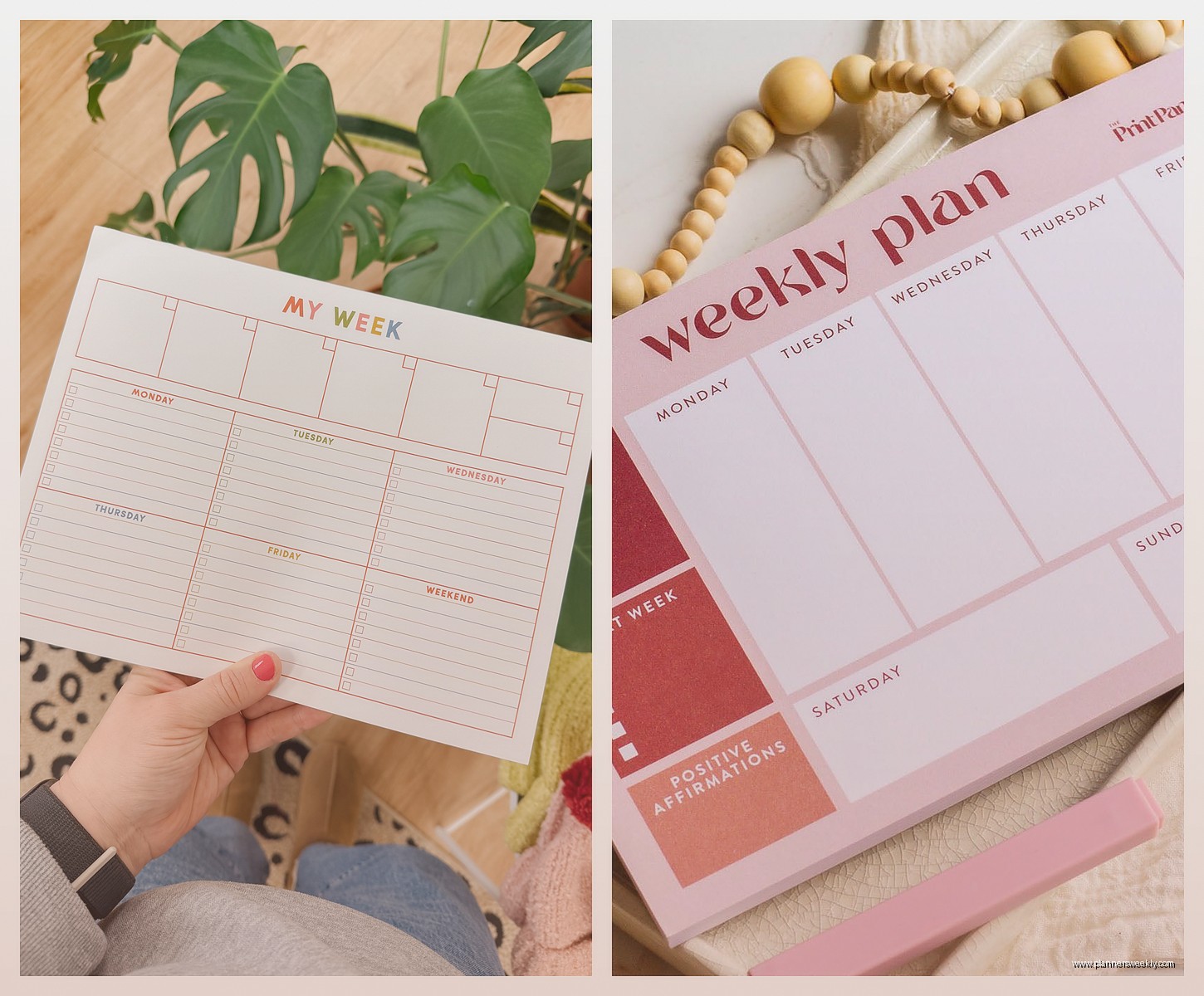
The paper quality on the Bloom ones is really good too, it’s 70lb paper which means it’s thick enough for most pens. I tested it with fountain pens because I’m extra like that and even those didn’t ghost through too badly.
The Layout Situation
Most desktop weekly planners come in three basic layouts and I have opinions about all of them:
- Vertical columns for each day – this is the classic and honestly still the best for most people
- Horizontal rows with time blocks – better if you’re scheduling meetings all day
- That weird grid thing where days are columns but there’s also rows for categories – I don’t get who this is for but it exists
The AT-A-GLANCE weekly planner uses the vertical column thing and it’s probably the most straightforward option if you just want something that works. It’s not fancy, the design is basic black and white, but there’s something satisfying about how clean it is. Plus it’s like $12 which is reasonable.
Wait I Forgot to Mention the Tear-Off Situation
So some of these have perforated edges and some don’t, and this matters more than you’d think. The ones with perforation let you tear off each week when you’re done, which is nice if you like that fresh start feeling. The ones without perforation you just flip the page over and keep going.
I prefer the tear-off style because I’m weird about wanting to physically remove completed tasks from my life, but my friend Sarah keeps all her old pages in a folder for reference and she hates the perforated ones because they don’t stay as neat.
The Simplified weekly desk pad has really good perforation that actually tears cleanly along the line. I’ve used cheaper ones where the perforation is basically decorative and you end up with this jagged edge that looks terrible.
The Binding Type Nobody Talks About
Okay this is super specific but the binding matters. Most desktop planners are either glued at the top or have that spiral binding.
Glued at the top is cleaner looking but sometimes pages fall out if you’re rough with them. I had this happen with a cheap one from Target where by week 20 pages were just randomly detaching.
Spiral binding is more durable but it catches on stuff. My sweater got caught on my planner’s spiral last week and it was this whole thing. Also spiral-bound ones don’t stack as neatly if you’re storing old ones.
The best option I’ve found is the Blue Sky one that has this concealed spiral binding where it’s spiral but covered with a strip of paper so it doesn’t catch on things. It’s like they actually thought about how humans use these.
Special Features That Are Actually Useful
Some planners have all these extra features and most are useless but a few are genuinely helpful:
The notes section on the side or bottom is essential. Don’t buy one without this. You will want to write down random stuff that doesn’t fit into a specific day slot.
Monthly calendar overview at the top of each week is surprisingly useful for context. The Lemome weekly planner has this and I didn’t think I’d use it but I reference it constantly to see what’s coming up.
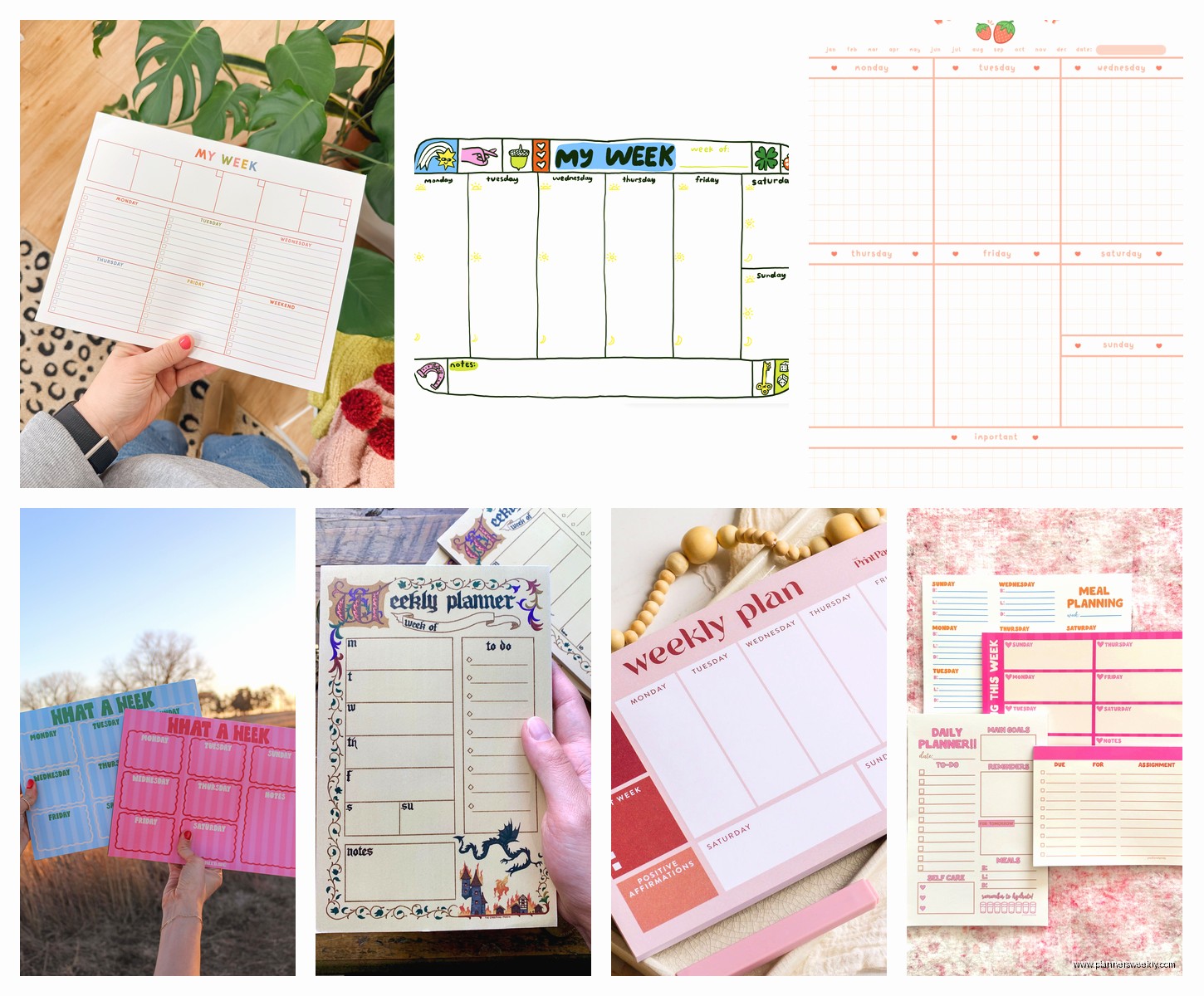
Checkbox lists for to-dos separate from scheduled items – this is clutch. The Do It All weekly pad has dedicated checkbox areas and it changed how I use desktop planners because now I can separate “must do today” from “would be nice to do today.”
Oh and Another Thing About Paper Quality
I mentioned this earlier but it’s worth expanding on because bad paper ruins everything. You want at least 60lb paper, preferably 70lb or higher.
The cheap planners at discount stores are usually 20lb paper which is basically tissue paper. Your pen will bleed through, you’ll see the previous page’s writing, and it feels flimsy when you’re writing.
I did this whole comparison where I tested the same pen on different planners and the difference was shocking. On the Mead weekly planner (which is budget-friendly but decent), my regular ballpoint pen worked fine. On some random Amazon basics one, the same pen bled through immediately.
The Undated vs Dated Debate
This is personal preference but I’m gonna tell you my opinion anyway. Dated planners are better if you’re using them in real-time for the current week. You don’t have to write in dates which saves time and looks cleaner.
Undated planners are better if you’re inconsistent about using planners (no judgment, we’ve all been there) or if you want to start mid-year. Nothing worse than buying a planner in March and half of it is already past dates you’ll never use.
The Ink + Volt weekly pad is undated and has 52 sheets so it’s a full year worth if you use one per week. I started using it in September and didn’t feel like I was wasting pages.
What I Actually Keep on My Desk Right Now
Okay so after testing like fifteen different options, I currently use the Rifle Paper Co. Garden Party weekly desk pad because it hits all my requirements: good paper weight, stays put on my desk, pretty but not too busy, and the layout makes sense.
But I also keep a smaller backup planner, the Purple Trail weekly notepad, in my desk drawer for weeks when I travel because it’s smaller and fits in my bag better. The desktop ones are great when you’re actually at your desk but not practical for throwing in a tote bag.
The Ones I Didn’t Like
Worth mentioning what didn’t work for me. The ban.do weekly planner was too cutesy and the paper quality wasn’t great. It’s cute for Instagram photos but annoying to actually use.
The Moleskine weekly planner was disappointing because Moleskine usually makes good stuff but this one felt overpriced for what you get. The paper was fine but nothing special, and the layout was cramped.
Any of the super cheap ones from dollar stores are honestly not worth it even though they’re like $3. The paper is terrible, they fall apart, and you’ll end up buying another one anyway so just spend the $12-15 on a decent one from the start.
Random Tips That Helped Me
Use different colored pens for different types of tasks. I use black for work stuff, blue for personal, and red for urgent things. Makes it way easier to scan your week quickly.
Don’t write too small trying to fit everything in. If you run out of space, that’s what the notes section is for or just use abbreviations.
Keep your planner in the same spot on your desk always. I put mine to the right of my keyboard and it’s always there. When I moved it around I’d forget to check it.
Actually tear off or flip the page at the end of each week. Don’t let old weeks pile up because then you’ll stop using it. This is coming from someone who let four weeks pile up once and then just gave up on the whole planner.
Where to Actually Buy These
Amazon has most of these and the reviews are actually helpful for once. Target carries Blue Sky and AT-A-GLANCE in stores which is nice because you can see them in person.
Stationery stores obviously have the best selection but you’ll pay more. Worth it if you want to test paper quality before buying though.
Etsy has lots of unique options from small makers and the quality is usually really good but shipping takes forever and they’re pricier. I got one from a shop called NotebookTherapy that took three weeks to arrive but it was gorgeous.
If you’re on a budget, honestly the AT-A-GLANCE one from Target is like $12 and totally functional. You don’t need to spend $30 on a fancy one unless the design really matters to you.
The Sustainability Thing
I know we’re supposed to care about this stuff and I do but also like… it’s paper, it’s gonna get used up. Some brands use recycled paper which is cool. The Decomposition weekly planner is made from 100% post-consumer waste and it’s actually nice quality, not that rough recycled paper from the 90s.
But honestly if sustainability is your top priority maybe a whiteboard or digital planner makes more sense? I’m not trying to be preachy, just realistic about the fact that paper planners are inherently disposable products.
Okay I think that covers everything I’ve learned from testing these. The short answer if you just want me to tell you what to buy: get the Rifle Paper Co. one if you want something pretty that works well, the Blue Sky one if you want the best layout, or the AT-A-GLANCE one if you just want something cheap and functional. You really can’t go wrong with any of those three depending on what matters most to you.
