
Digital Productivity, Online planners, Planners
Daily Planner Notepad: Best Desktop Options
May
okay so I just spent the last three weeks testing desktop planner notepads and here’s what actually matters
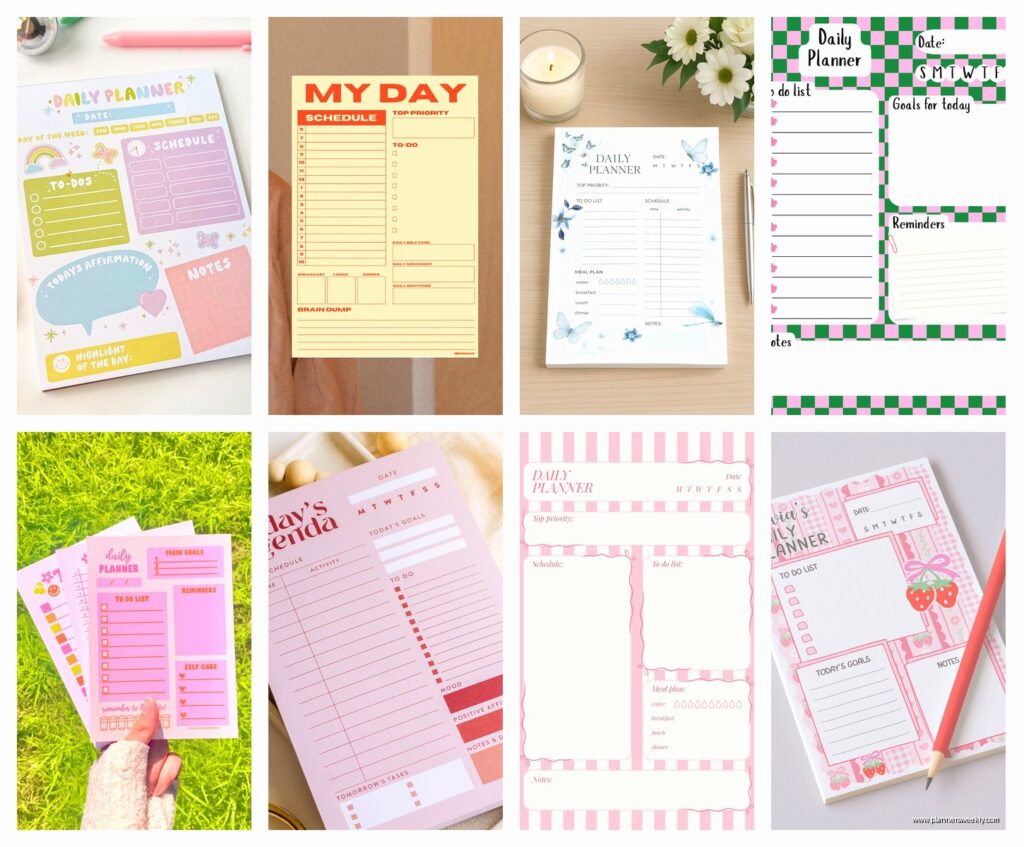
The Bloom Daily Planners one is sitting on my desk right now and honestly it’s probably the safest bet for most people. It’s got that tear-off design which sounds gimmicky but when you’re done with Monday you just rip it off and suddenly Tuesday is staring at you. My cat knocked over my coffee on it last week and only one page got ruined instead of like, an entire week spread in a bound planner.
But let me back up because the size thing is actually the first decision you gotta make. Desktop planners come in basically three sizes and this matters more than I thought it would:
- Small ones around 6×9 inches – fit on crowded desks but you’re gonna be writing tiny
- Medium around 8.5×11 – standard paper size, easy to file if you’re into that
- Large ones 11×17 or bigger – honestly unless you have a huge desk these are annoying
I thought I wanted the big one because more space equals more planning right? Wrong. It took over my entire workspace and I kept having to move it every time I needed to actually do the work I’d planned. So medium is the sweet spot for most people.
the ones I actually tested and what happened
The Bloom one I mentioned comes in a 6×9 size with 80 sheets so that’s 80 days of planning. The layout has your schedule running down the left side in hourly blocks from 6am to 9pm, then the right side has a to-do list section, a priorities box, and this little gratitude section at the bottom that I literally never use but some people are really into that stuff. The paper quality is decent, like 70lb or something, so my Pilot G2 pens don’t bleed through but my brush pens do a little bit.
oh and another thing about the Bloom – it has this cardboard backing that’s actually sturdy enough that you can write on it without a desk underneath. I took it to a coffee shop once when my client canceled and I had an hour to kill and it worked fine balanced on my lap.
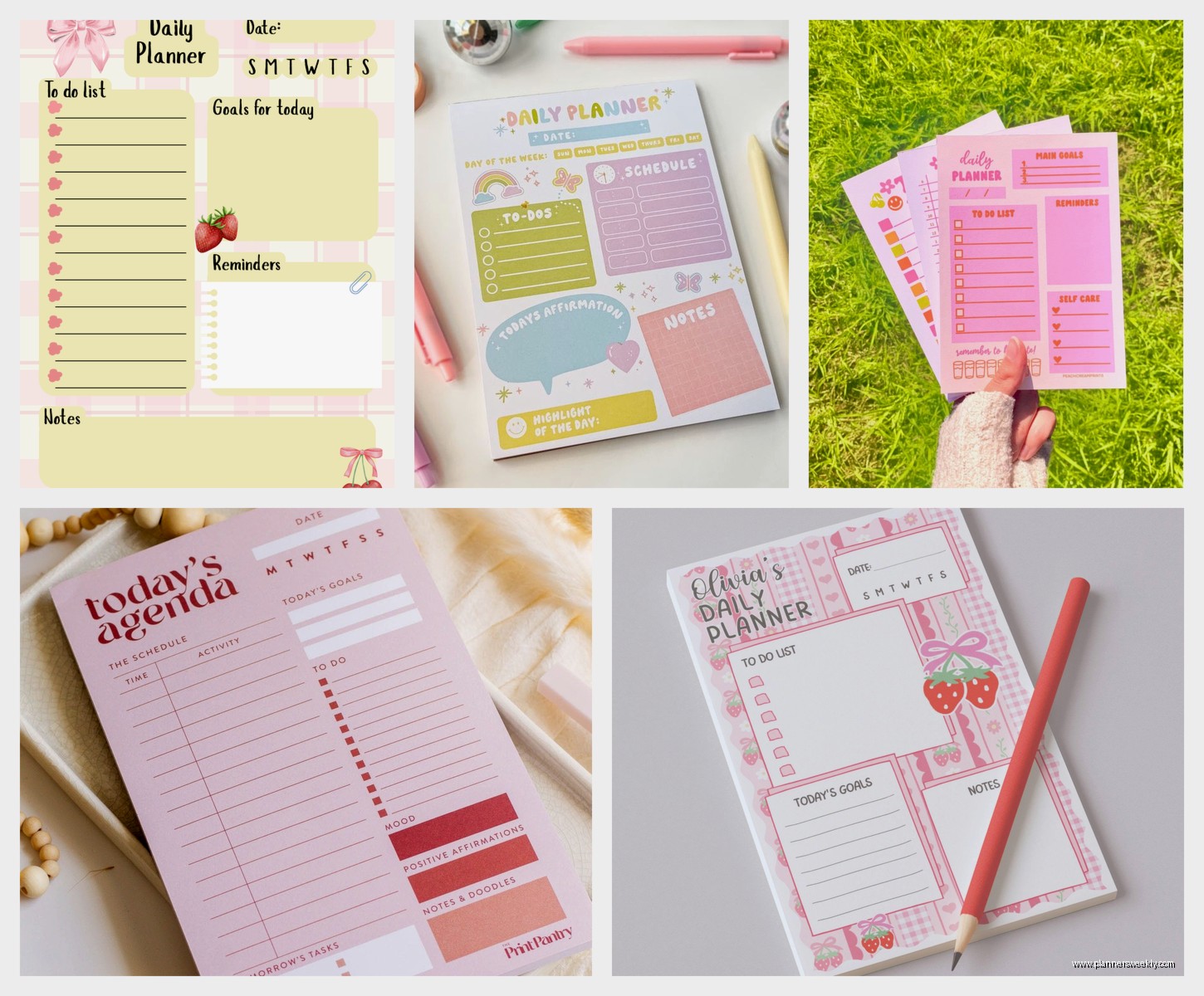
The At-A-Glance QuickNotes daily planner is a completely different vibe. This one’s wire-bound at the top which I didn’t think I’d like but it actually lays flat really well. Each page is divided into three sections: appointments, action items, and notes. Super simple, no motivational quotes or habit trackers or any of that extra stuff. Just planning. It’s 8×10 inches so slightly narrower than standard paper and honestly that’s perfect for my desk setup.
What I like about this one is the paper is thicker – definitely 80lb or more – and it has this slight cream color instead of bright white which is easier on my eyes when I’m planning first thing in the morning. The wire binding means you can fold it completely back on itself if you need to save space. My coworker does this and clips it to her monitor stand somehow.
wait I forgot to mention the undated vs dated situation
This is huge actually. Most desktop daily planners are undated which means you fill in the date yourself. Sounds like extra work but it’s actually better because:
You don’t waste pages when you skip weekends or go on vacation. I went to visit my sister for four days last month and didn’t lose four pages of my planner to days I wasn’t even working. You just pick up where you left off.
The Panda Planner Daily is undated and it’s got this whole system built in where you review yesterday and plan today and set priorities. It’s more structured than the others which some people love and some people find annoying. I used it for two weeks and it felt like homework? But my friend Sarah swears by it and says the structure keeps her accountable.
It’s got morning and evening review sections which okay fine I never did the evening review because who has time for that at the end of the day. But the morning section where you list your top priorities actually did help me focus better. The pad is 8.5×11 and comes with 70 sheets.
the paper quality thing nobody talks about enough
okay so funny story, I bought this gorgeous planner from Rifle Paper Co because it had pretty florals on each page and the paper was SO THIN. Like almost see-through thin. My Frixion pens bled through immediately and even pencil showed through to the next page. It’s been sitting in my drawer for months because I can’t bring myself to throw away something that cost $24 but I also can’t use it.
So here’s what I learned about paper weights:
- 60lb paper – too thin, most pens will bleed through
- 70lb paper – okay for ballpoint pens, iffy with gel pens
- 80lb+ paper – good for most pens, even some light markers
The problem is most products don’t actually list the paper weight so you’re kinda gambling. The reviews sometimes mention it though. Search for “bleed through” in the reviews and you’ll usually find out the truth.
this is gonna sound weird but the hourly layout matters
Some planners have every hour marked out from like 5am to midnight and honestly that’s overwhelming to look at. The AT-A-GLANCE one I mentioned earlier just has morning, afternoon, evening sections which is way more chill but also less precise if you’re someone who actually schedules in hour blocks.
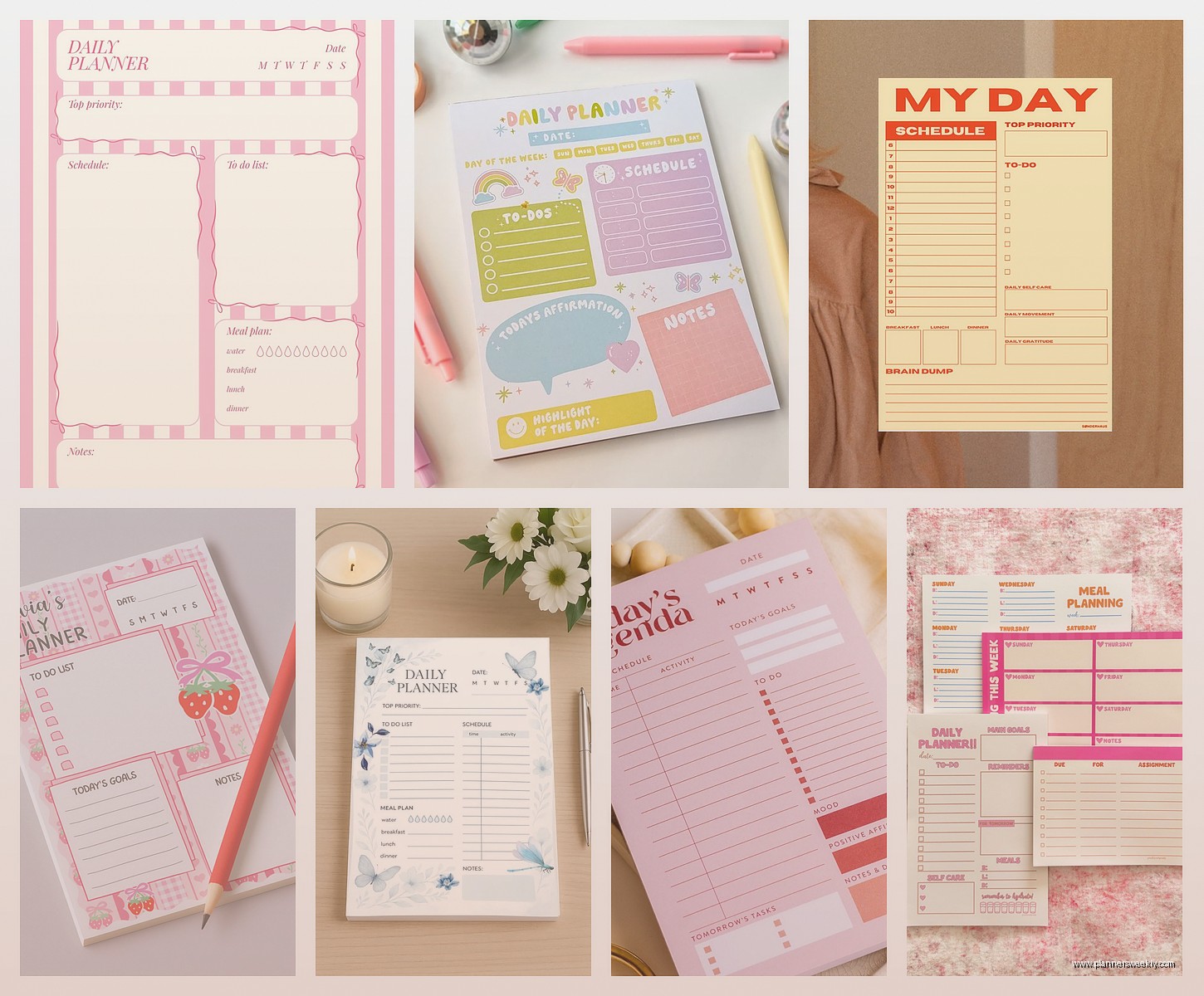
The Inkwell Press Daily Pad has half-hour increments from 6am to 9pm and that’s actually perfect for me. I don’t need to plan my 5am because I’m sleeping, and after 9pm I’m watching The Bear or whatever and not working. The half-hour blocks mean I can actually schedule my 30-minute calls without them taking up a full hour block.
This one is 8.5×11 and has 50 sheets. The layout puts the schedule on the left, a big notes section on the right, and then at the bottom there’s a section for dinner planning which I use for random notes instead because I’m not planning dinner at my desk planner but some people apparently do this.
wait let me tell you about the one I returned
The Blue Sky Daily Planner looked perfect online – good size, nice layout, affordable at like $15. But when it arrived the pages were perforated but barely? Like I tried to tear one off cleanly and it ripped all jagged and took part of the next page with it. Absolutely infuriating. I returned it the same day.
This is why the tear-off mechanism matters. The Bloom one has really clean perforations that actually work. The AT-A-GLANCE is wire-bound so you just tear pages out if you want or leave them attached. But those half-hearted perforations that don’t actually perforate? Avoid.
the backing situation
Some desktop planners are just a pad of paper with a thin cardboard back. Others have a hardboard backing that’s really sturdy. The sturdy ones cost more but they’re worth it if you write at your desk standing up or if you move your planner around a lot.
The Rhodia DotPad has this orange cardboard backing that’s super firm and the whole thing just feels premium. It’s not technically marketed as a daily planner – it’s more of a meeting notes pad – but the dot grid format means you can set it up however you want. I used it as a daily planner for a week and just drew my own sections. Each page is 8.25×11.75 inches and the paper is French-made and really smooth. Definitely 80lb paper, probably more.
The dots are spaced perfectly for writing and the pages are microperforated so they tear out clean. It’s more expensive at around $30 for 80 sheets but the quality is noticeably better than the budget options. My client actually asked about it during a video call because it looked professional on my desk.
okay here’s my actual recommendations based on different situations
If you’re just starting with desktop planning and don’t wanna spend much: get the Bloom Daily Planners one. It’s usually under $15, the layout works for most people, and if you hate it you’re not out much money. The tear-off pages mean you get that satisfaction of ripping off a completed day which sounds dumb but it’s actually motivating.
If you write a lot and need good paper: AT-A-GLANCE QuickNotes or Rhodia DotPad. Both have thick paper that handles most pens well. The Rhodia is definitely better quality but costs twice as much.
If you want structure and accountability: Panda Planner Daily. The built-in review sections and priority setting actually work if you commit to using them. Just know it’s more involved than a basic planner.
If you want flexibility: Rhodia DotPad or any dot grid notepad you can customize yourself. This requires more mental energy to set up each day but you can make it exactly what you need.
the things that don’t matter as much as you think
Cute designs and colors – I know, I know, pretty planning supplies are tempting. But you’re gonna be writing all over it anyway and after three days you stop noticing the floral border or whatever. Function over form here.
Extra sections like habit trackers, water intake logs, exercise tracking – if you’re not already tracking these things elsewhere, a section on your daily planner isn’t gonna make you start. Just adds clutter to the page.
Motivational quotes – again, nice in theory but after seeing the same rotation of “You got this!” and “Make today amazing!” for three weeks straight, they just become visual noise.
the actual workflow that works
Here’s how I use mine and this system works way better than what I was doing before. Every evening before I finish work – or okay realistically like three evenings a week because life happens – I look at tomorrow’s page and write down:
- Any appointments or calls with specific times
- The three most important tasks that HAVE to get done
- A brain dump of other stuff I should probably do if there’s time
Then in the morning I add anything that came up overnight via email or whatever. Throughout the day I cross stuff off which again sounds basic but the physical act of drawing a line through a task is way more satisfying than clicking a checkbox in an app.
oh and another thing – I keep yesterday’s page next to today’s page for the first half of the day in case I need to reference something. The wire-bound planners make this easier because you can fold the old page behind, but with tear-off ones I just keep the old page next to my planner until afternoon then recycle it.
where to actually buy these
Amazon has most of them and you can usually find reviews with actual photos people took of the paper quality and layout. Target carries the AT-A-GLANCE and Bloom ones in store which is nice because you can see the actual size before buying. Michaels sometimes has them too and they’re always running 40% off coupons.
For the Rhodia you’ll probably need to order online unless you have a fancy stationery store nearby. Goulet Pens carries them, JetPens has them, and yeah Amazon too.
I’d avoid the generic no-name ones on Amazon even though they’re cheaper. I tried one that was $8 for 100 sheets and the paper was basically tissue paper and the binding fell apart after two weeks. Sometimes the name brand tax is worth it.
The other thing nobody tells you is that these go on sale at weird times. Like right now in January everyone’s buying planners so they’re full price, but in March or April when people have given up on their planning systems, you can find them discounted. I bought three Bloom planners last spring for $9 each because they were clearing out inventory.
Anyway that’s basically everything I learned from testing these for the past few weeks. The Bloom one is still my daily driver but I keep the Rhodia DotPad around for when I’m meeting with clients because it looks more professional than a planner with little boxes for gratitude journaling or whatever.
