Digital Productivity, Online planners, Planners
Free Staff Schedule Maker: Top Tools for Businesses
Mar
Okay so I just spent the last three weeks testing like eight different free staff schedule makers because two of my clients were literally drowning in their spreadsheet chaos and honestly some of these tools are way better than I expected.
When Scheduling Actually Became My Problem
So my friend Sarah runs this little coffee shop and she was doing schedules in a WhatsApp group chat which, no. Just no. I told her we’re finding you something better and that’s how I ended up down this rabbit hole. Started testing everything in January 2025 and some tools have changed A LOT from last year.
Homebase Is Probably Where You Should Start
The free version of Homebase lets you schedule up to 20 employees which is honestly generous. I tested this with Sarah’s team first and the setup took maybe 15 minutes? You can do it from your phone which matters because who’s sitting at a desktop to make schedules anymore.
What I actually liked is the drag-and-drop thing works smoothly. You’re not fighting with the interface. You add your employees, set their availability (they can do this themselves through the app which saves SO much back-and-forth texting), and then you just start dropping shifts onto the calendar.
The mobile app sends push notifications when schedules are ready or if someone requests time off. Sarah said her staff actually checks it instead of claiming they “didn’t see the schedule” which was happening constantly before.
The annoying part: Time clock features are limited on the free plan. You get basic punch in/out but no GPS verification, so if you need to make sure people are actually at your location when they clock in, you’ll hit that paywall fast.
When I Work for Teams That Never Check Their Email
Tested this one at my gym where the manager was still printing schedules and taping them to the wall like it’s 2003. When I Work has this text message thing that’s actually included in the free version for up to 75 employees which blew my mind.
Your staff gets a text when the schedule drops. Not an email they’ll ignore. An actual text message. Game changer for teams that aren’t super tech-savvy or just… never check email (which is most people tbh).
The schedule creation is pretty intuitive. Color-coding by role or shift type helps when you’re looking at a busy week. You can copy previous weeks which saves time, and there’s a shift marketplace thing where employees can pick up open shifts themselves instead of you playing phone tag trying to cover someone’s shift.
Real talk though: The interface feels a bit dated compared to newer tools. It works fine but it’s not gonna wow you visually. Also the free version caps at 75 employees total which sounds like a lot until you realize that’s cumulative, not active schedules.
Setting Up Availability Is Key
One thing I learned testing all these tools is you HAVE to get your team to fill out their availability properly from the start. I know it’s annoying, I know people won’t want to do it, but trust me. Spend one staff meeting getting everyone to put in their availability constraints and you’ll save hours every week.
Most of these tools let employees set recurring availability (like “never available Tuesdays” or “only mornings on weekends”) and that info just sits there in the system. Then when you’re building schedules, you’re not accidentally putting Jessica on a Tuesday shift when you know she has class.
7shifts for Restaurants Specifically
Okay so funny story, I was watching The Bear (again) while testing this one and it just felt right for restaurant scheduling? 7shifts is built specifically for food service and you can tell.
Free version works for one location with unlimited employees. The layout shows you labor cost estimates as you build schedules which is huge for restaurants running on tight margins. You can see “okay this shift setup is gonna cost me $X in labor” before you publish it.
They have this thing called shift pools where you can create groups of employees who all do the same role, then assign shifts to the pool and let people claim them. Works great for restaurants where you’ve got like six servers who can all cover the same shifts.
The time-off request system is built in and color-coded on the calendar so you’re not scheduling someone who already requested that day off. Revolutionary concept, I know, but you’d be surprised how many tools make this harder than it needs to be.
Limitation: Free tier doesn’t include the reporting features or the task management stuff. You’re basically getting schedule creation and communication, that’s it.
Connecteam Actually Surprised Me
I wasn’t expecting much from Connecteam because I’d never heard of it before, but then I tested it with a small cleaning service (10 employees) and it’s actually really solid for field teams.
The free version works for up to 10 users which is perfect for micro businesses. What makes it different is it’s not just scheduling, it’s like an all-in-one employee app. You get scheduling, but also a time clock with GPS, a newsfeed for company updates, and document sharing.
For teams that aren’t in one location, the GPS time tracking on the free plan is legitimately useful. You can see where people clocked in from which matters for cleaning crews, delivery drivers, maintenance teams, that kind of thing.
Building schedules is straightforward. You can set up recurring shifts which I found myself using way more than I expected. Like if you’ve got the same basic structure every week, you set it once and just adjust as needed.
Wait I forgot to mention, the mobile app is genuinely good. Some of these tools have mobile apps that feel like afterthoughts, but Connecteam clearly designed for mobile first. Makes sense since field teams are obviously not at desks.
The Communication Features Matter More Than You Think
Something I didn’t appreciate until I actually started using these tools is how much the built-in messaging matters. When someone calls in sick or needs to swap shifts, having that conversation happen IN the scheduling app instead of across texts, calls, and random WhatsApp messages is so much cleaner.
Most of these free tools include some kind of team chat or announcement feature. Use it. Get your team in the habit of checking the app for schedule stuff instead of texting you at random hours.
Findmyshift for European Teams or Weird Time Zones
Tested this one because I have a client in the UK and scheduling was getting confusing with time zones. Findmyshift is based in the UK and handles multiple time zones really well, plus they’re super compliant with European labor laws if that matters for you.
Free version supports up to 5 staff members which is limiting but fine for very small teams. The interface is clean, maybe the cleanest of all the ones I tested? It’s just pleasant to look at which sounds shallow but when you’re making schedules every week it actually matters.
They have good shift templates and the ability to set minimum staffing requirements. Like you can say “I need at least 2 people on the floor at all times” and it’ll flag if you’re under-scheduled.
The limitation is obviously that 5-person cap. Once you hit 6 employees you’re stuck. But for a tiny cafe or a small retail shop just starting out, it’s a solid option.
Google Sheets Is Still Valid Actually
Look, I know this sounds basic but hear me out. If you’ve got a super small team (like under 5 people) and everyone’s comfortable with Google Sheets, sometimes a shared spreadsheet template is genuinely fine.
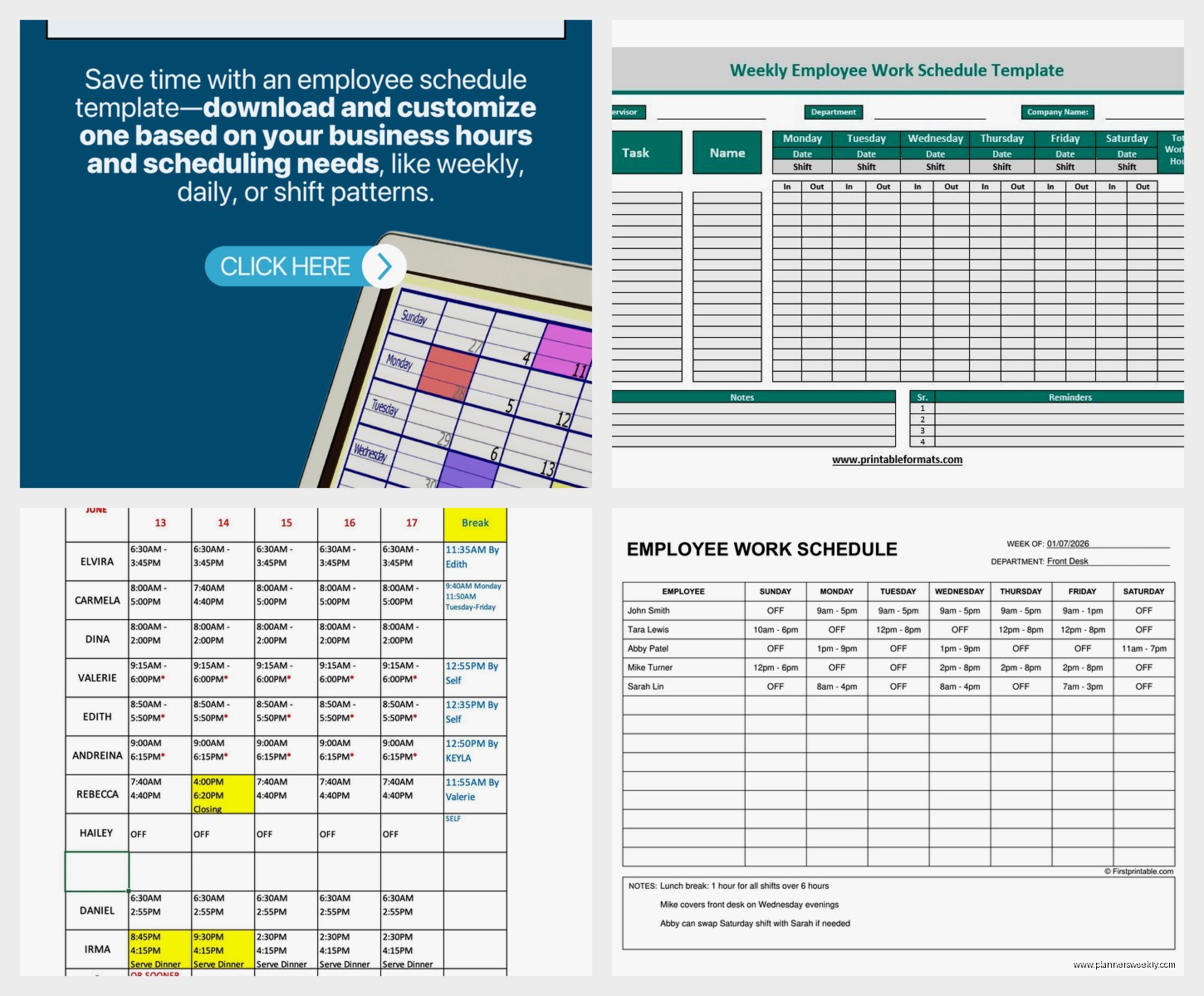
I found a few decent free templates online, customized one for a friend’s boutique (3 employees total), and it works. They can all access it, they can see the schedule, they can request time off by highlighting dates in yellow. Is it fancy? No. Does it cost anything? Also no.
The problem is it doesn’t scale and there’s no notification system. You’re relying on people to remember to check the sheet. But for a really small operation where everyone kinda knows what’s going on anyway, don’t overcomplicate it.
What Actually Matters When You’re Choosing
After testing all these, here’s what I think you should actually consider:
Team size is the biggest factor. Most free tools cap at a certain number of employees. Count your actual team including part-timers and make sure you’re under that limit with room to grow a little.
Mobile app quality matters. If your team isn’t sitting at computers, they need a mobile app that doesn’t suck. I’d say Homebase and Connecteam have the best mobile experiences of the free tools.
Industry-specific features can be worth it. Like 7shifts for restaurants or Connecteam for field teams. The general-purpose schedulers work fine but if there’s one built for your type of business, start there.
Communication features save you time. Tools with built-in messaging and notifications mean fewer “did you see the schedule” texts at 10pm.
The Stuff That Annoyed Me
Most free versions will nag you about upgrading. Some are subtle about it, others (looking at you Deputy) are really aggressive with the upgrade prompts. It gets old.
Time tracking features are usually limited or missing entirely on free plans. If you need detailed time tracking with GPS verification and overtime calculations, you’re probably gonna have to pay for something.
Reporting is always behind the paywall. The free versions let you make schedules but if you want to analyze labor costs or track who’s actually working their scheduled hours, that’s premium territory.
What I’m Actually Recommending
If you’ve got a retail or service business with under 20 employees: Homebase. It’s the most well-rounded free option and the mobile app is solid.
For restaurants specifically: 7shifts because the labor cost visibility and restaurant-specific features are worth it.
If you’ve got field teams or people working from different locations: Connecteam for the GPS tracking on the free tier.
Super tiny team (under 5 people) that just needs something simple: Findmyshift or honestly just a Google Sheet template.
Teams that are bad at checking apps and need text notifications: When I Work because those text alerts actually get read.
My Actual Workflow Now
I set up Homebase for three of my clients and here’s the routine that’s working: Every Thursday afternoon I (or they, I’m teaching them) build next week’s schedule. Takes about 20 minutes once you get the hang of it. The schedule publishes automatically on Friday morning and everyone gets notified.
Time-off requests come through the app during the week and you just approve or deny them right there. No more sticky notes or trying to remember who asked for what day off three weeks ago.
Someone needs to swap shifts? They can post it in the app and other employees can pick it up. You still have to approve it but at least they’re solving it themselves instead of you playing middleman.
Oh and another thing, I have clients review their schedules on Sunday night for the week ahead. Just a quick check to make sure no one’s scheduled during their requested time off or working impossible back-to-back shifts. Catches mistakes before they become problems.
The biggest thing is just getting your team actually using whatever tool you pick. That first week you’re gonna have to remind people constantly to check the app. But once it becomes habit, it’s so much smoother than whatever chaotic system you’re probably using now.
Just pick something and commit to it for at least a month before you decide if it’s working. Every tool has a learning curve and you won’t really know if it fits until you’re past that initial setup phase.