
Digital Productivity, Online planners, Planners
Planner Pages: Best Refills & Customization Options
Apr
Okay so I just spent the last three weeks testing like every planner refill system I could get my hands on and here’s what actually matters when you’re trying to figure out what to buy.
The Disc-Bound Systems Are Where I Started
Happy Planner is probably what you’ve seen everywhere and honestly it’s pretty solid for beginners. The punch is like $15 and the discs come in a million colors which sounds dumb but when you’re staring at this thing every day it kinda matters? I have the rose gold ones and they make me slightly less annoyed when I’m planning meal prep.
The refill pages are where it gets interesting though. Their standard monthly and weekly layouts are fine but nothing special. What I actually use from them are the blank dot grid pages because they’re thick enough that my Mildliners don’t bleed through. Tested that extensively because I had a client cancel last Tuesday so I spent an hour just swatching every marker I own on their paper.
Arc system from Staples is basically the same concept but cheaper and the punch is way better quality. Like the Happy Planner punch gets wobbly after a few months but I’ve had my Arc punch for two years. The pages are slightly thinner though so if you’re a heavy ink user that’s gonna be a problem.
Customizing Disc-Bound Stuff
Here’s what nobody tells you about disc systems: you can mix literally everything. I have Arc discs with Happy Planner covers and random Etsy printables I punched myself. Works perfectly fine. The disc sizes are pretty universal at half inch intervals.
For customization the best thing I did was buy a pack of those clear plastic dividers and label them myself. The pre-made ones are overpriced and never have the categories I actually need. Who needs a “fitness” tab? I need a tab that says “stuff I’m avoiding” and another that says “actual deadlines.”
Ring-Bound Planners Are Having a Moment
Filofax is the classic option and their paper quality is genuinely excellent. The Personal size (which is 3.75 x 6.75 inches) fits in most bags and has the most refill options. I tested their week on two pages layout and it’s actually really well designed with enough space that I’m not writing microscopic notes.
But wait I forgot to mention the whole ring size thing because that confused me for like a month when I first got into this. Personal size Filofax uses 23mm rings (that’s about 1 inch). A5 size uses 25mm or 30mm depending on the binder. You can’t just buy any refill, it has to match your ring size AND page size. Learned that the hard way when I ordered a gorgeous set of monthly pages that didn’t fit anything I owned.
Kikki.K has similar sizing to Filofax and their refills are prettier but way more expensive. We’re talking like $18 for a monthly refill pack versus $12 for Filofax. The paper is nearly identical quality though so unless you really love their designs just go with Filofax.
The Budget Ring Option
Target’s Blue Sky planners have removable pages and they’re like $20 for the whole setup. The paper is thinner and you’ll get some ghosting with wet pens but for someone just starting out it’s perfect. I recommended this to a client who wasn’t sure if she’d actually use a planner and she’s still using it eight months later.
Oh and another thing about ring planners: you can find SO many free printables online that fit standard sizes. I have a whole folder of budget trackers and habit trackers I downloaded from random blogs and just printed on 32lb paper at home. Punch them with a regular 6-hole punch and you’re set.
Traveler’s Notebook Style Is For Specific People
This is gonna sound weird but I resisted Traveler’s Notebooks for years because they looked too hipster and precious. Then I actually tried one and okay I get it now. The system is just elastic bands holding notebooks inside a leather cover. That’s it. It’s so simple it’s almost stupid but it works really well.
The original Traveler’s Company notebooks are expensive, like $8 per insert, but the paper is incredible. I use their lightweight paper for daily pages and the cream paper for notes. They have monthly, weekly, daily, blank, grid, everything. The refills last me about 3-4 months depending on how much I write.
The regular size (about 4.3 x 8.25 inches) is what most people use. Passport size exists but it’s too small for actual planning unless you have tiny handwriting. There’s also an A5 size that’s newer and honestly that might be the sweet spot if you need more space.
Cheap Traveler’s Notebook Alternatives
Amazon has a million knockoff covers for like $15-20 and they’re fine. The leather isn’t as nice but it’s leather and it holds notebooks so it does the job. For inserts I actually really like the Moleskine Cahier notebooks because they fit perfectly inside Traveler’s Notebook covers and they’re only like $10 for a three-pack. Just remove the staples carefully and you can fold them to fit the TN elastic system.
My cat knocked over my coffee onto my testing setup while I was writing this section so I can personally confirm that leather covers protect your pages pretty well from minor spills. Still annoyed about the coffee though.
Loose Leaf Systems If You Want Maximum Control
Regular three-ring binders are actually underrated for planning. Everyone wants the fancy systems but a 1-inch binder from Office Depot with some dividers works perfectly fine. I use this method for my blog content planning because I can add and remove pages constantly.
The key is getting good paper. I buy 32lb laser paper in bulk and print my own layouts. There are templates everywhere – Scattered Squirrel has great free ones, and so does Serendipity and Spice if you search their archives. Print double-sided if you want to save paper but honestly single-sided is easier to use.
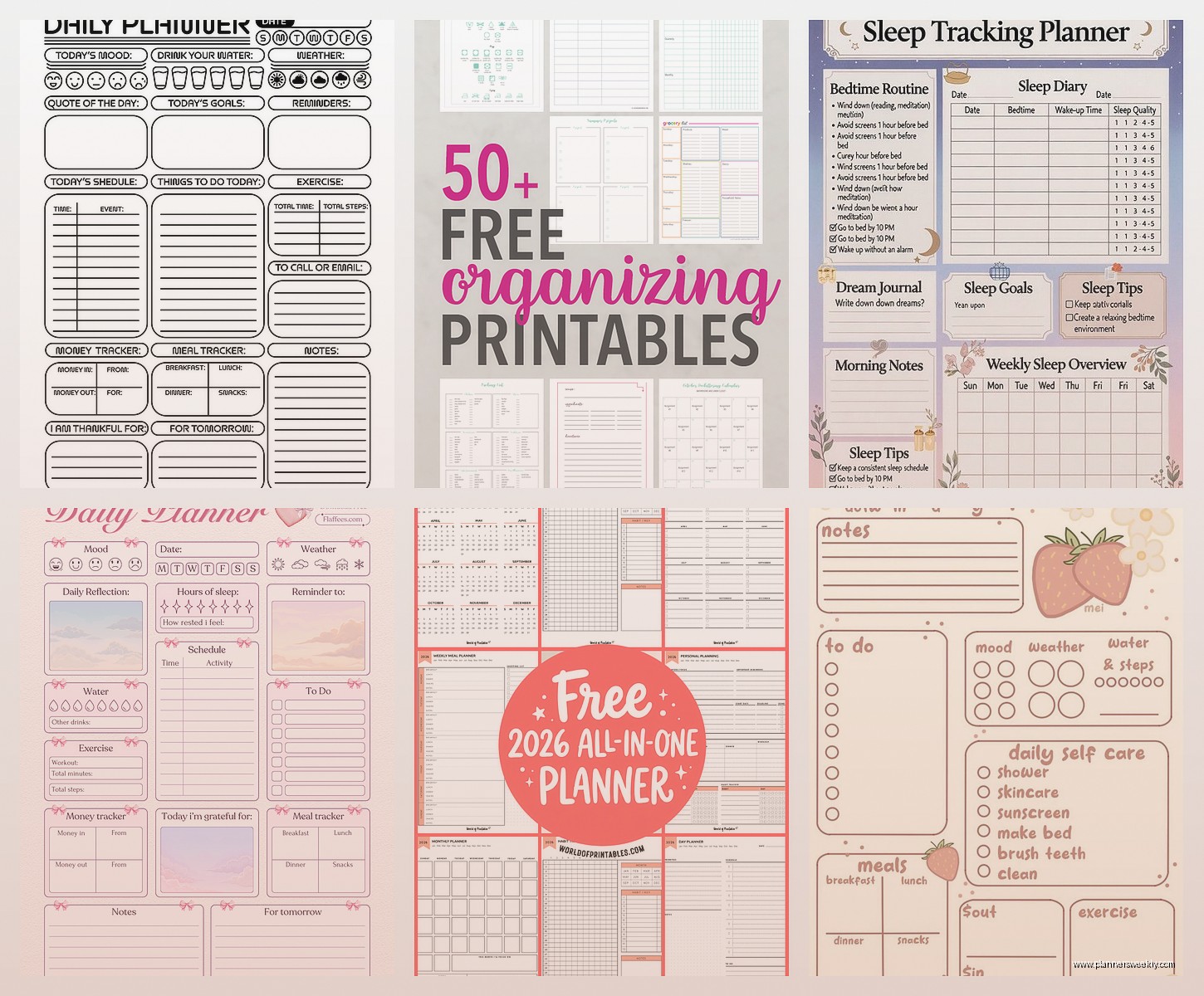
For weekly spreads I’ve been using a modified Erin Condren vertical layout that I found on Pinterest and adjusted in Canva. It has three sections per day which works for my time blocking method. Took me forever to find a free layout that actually matched how I work instead of forcing me to adapt to someone else’s system.
The Hole Punch Situation
You’re gonna need a good three-hole punch if you go this route. The adjustable ones are worth it because you can punch different paper sizes accurately. Mine was $25 from Amazon and it’s handled hundreds of pages without issues. The cheap ones get misaligned and then your pages don’t turn smoothly which is infuriating.
Customization Options That Actually Matter
Stickers are fun but they don’t improve functionality, let’s be real. What actually helps:
- Sticky tabs for quick navigation between sections – I use the Post-it durable tabs
- Page markers or ribbons so you can find today’s page instantly
- Pocket folders or envelopes for receipts and random papers
- Clear plastic covers if you’re putting your planner in a bag with pens
- Elastic closure bands to keep everything together
I added a zippered pouch to my main planner that holds stamps, a mini stapler, and paper clips. Sounds excessive but I use all of it regularly for client paperwork and it beats having stuff loose in my bag.
Paper Quality Is Not Negotiable
This is where I’m gonna sound picky but paper weight matters so much. Anything under 70gsm (that’s grams per square meter) is too thin for most pens. You want 80-100gsm for regular use. Tomoe River paper is only 52gsm but it’s specially designed for fountain pens so it’s an exception.
I tested a bunch of budget refills that were like 60gsm and they were unusable with anything except pencil and ballpoint. Highlighters showed through completely, gel pens bled, it was a mess. Don’t waste your money on thin paper even if the layout is perfect.
My favorite paper brands for refills: Clairefontaine (French, expensive but amazing), Rhodia (also French, slightly cheaper), and surprisingly the Walmart Pen+Gear brand is actually decent at 80gsm for like $4.
Coating and Texture
Some planner pages have a coating that makes them smoother but it can be slippery with certain pens. I prefer uncoated paper because my handwriting is messy and I need that slight tooth to the paper for control. But if you like smooth paper the coated stuff works better with quick-dry gel pens.
Dated Versus Undated Refills
Okay so funny story, I bought dated refills for 2023 in December 2022 and then didn’t start using them until February because life happened. Wasted two months of pages. Now I only buy undated refills and fill in dates myself. Takes an extra minute but you never waste pages.
Undated also means you can use the same refill design every year if you find one you really love. I’ve been using the same weekly layout template for three years now, just printing new pages as needed.
The only downside is holidays aren’t marked so I have to add those myself. I made a list of the holidays I actually care about (not many honestly) and just write them in at the start of each month.
Where to Actually Buy Refills
Amazon has everything but prices vary wildly. I check Jet Pens for Japanese planner supplies because their selection is better and shipping is fast. Goulet Pens also carries some planner stuff and their customer service is excellent if you have questions.
Etsy is hit or miss. Some sellers have amazing printable templates for like $5, others charge $20 for basic layouts you could make yourself in ten minutes. Read reviews carefully and check what format the files come in – PDF is easiest to print at home.
For physical pre-printed refills, Office Depot and Staples have basics in store which is nice because you can feel the paper quality before buying. Their selection is limited though so you’ll probably end up ordering specialty stuff online anyway.
International Shipping Warning
If you’re ordering from overseas be prepared for long shipping times and potential customs fees. I ordered from a UK stationery shop once and it took six weeks to arrive plus I had to pay an extra fee at delivery. The products were great but plan ahead if you’re going this route.
My Current Setup After All This Testing
I’m using an Arc system with custom printed pages on 32lb paper for weekly planning. For daily notes I have a Traveler’s Notebook with their lightweight paper insert. And I keep a small Filofax Personal size in my bag for quick notes and appointments when I’m out.
Is this too many planners? Probably. Does it work for me? Yeah actually it does. The Arc system lives on my desk, the TN is for deeper thinking and project notes, and the Filofax is my portable brain.
For refills I print my own weekly pages, buy Traveler’s Company inserts every few months, and stock up on Filofax monthly pages once a year when they go on sale.
The whole system cost me maybe $150 to set up initially and then about $30-40 per year for refills. Way cheaper than buying a new planner every year that doesn’t quite fit what I need.
Oh wait I forgot to mention fountain pen friendly paper – if you use fountain pens get Tomoe River, Clairefontaine, or Rhodia. Everything else will feather or bleed through. I learned this after ruining like twenty pages in my first fancy planner with my Lamy Safari. Still mad about that.
Anyway that’s basically everything I’ve figured out about planner refills and customization. Start with whatever system seems least complicated to you and then adjust as you figure out what you actually need versus what looks pretty on Instagram.
