Digital Productivity, Online planners, Planners
Weekly Planner Diary: Best Journal & Planning Options
Apr
Okay so I’ve been testing weekly planners for like three months now because honestly my old system completely fell apart and I needed something that actually worked. Not the aesthetic Instagram stuff but like, real planning that keeps me from missing dentist appointments and forgetting I promised to review that new gel pen set.
The Weekly Layout Thing Everyone Gets Wrong
First thing – most people grab a planner based on how pretty it looks and then wonder why they stop using it after two weeks. The layout matters SO much more than you think. I’ve got this Moleskine weekly horizontal that I thought would be perfect because it’s classic right? But the boxes are tiny and I write big when I’m rushing and it just became this cramped mess.
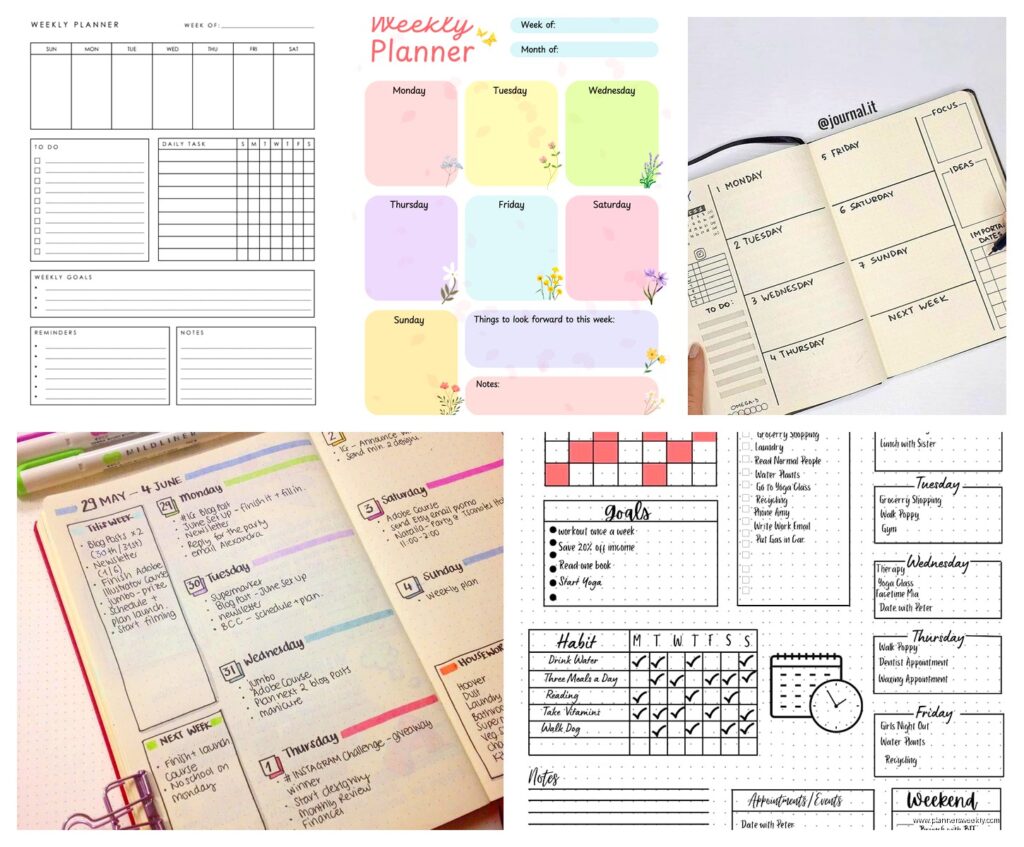
The vertical layout planners work better if you time-block. Like the Passion Planner has those hourly slots from 6am to like midnight and at first I thought that was overkill but then I realized I could actually see where my day was going. You can block out “writing blog posts 9-11am” and then “client calls 2-4pm” and suddenly you’re not just listing tasks, you’re actually scheduling your life.
Horizontal weekly spreads are better for people who think in tasks not time blocks. Each day gets a column and you just list stuff. Less structure but also less guilt when you don’t follow the exact schedule because let’s be real, when does any day go exactly as planned.
Size Actually Matters More Than I Expected
I used to be all about the pocket planners because portability, right? But then I’d forget to check it because it was buried in my bag. Switched to an A5 size (that’s like 5.8 x 8.3 inches) and it lives on my desk where I can actually see it.
The Leuchtturm1917 weekly planner in A5 is honestly my current favorite even though it’s kinda pricey. The paper quality means my fountain pens don’t bleed through which – okay this sounds bougie but if you’re gonna use something every single day it should at least feel nice to write in. Plus it has numbered pages and an index which I thought I’d never use but then I started tracking which weeks I was most productive and suddenly I’m that person.
Oh and another thing – the Hobonichi Weeks is this weird Japanese planner that’s skinny and tall and fits in your pocket but has like a whole notebook section on the left side. It’s got this Tomoe River paper that’s thin as tissue but doesn’t bleed. My client Sara uses it and swears by it but the weekly columns are TINY so unless you write small or use abbreviations it gets cramped fast.
Dated vs Undated Is a Bigger Deal Than You Think
I bought this gorgeous dated planner in March once because it was on sale and then felt guilty every time I saw those blank January and February pages. Such a waste. Now I only buy undated or I wait until January.
Undated planners like the Clever Fox or Panda Planner let you start whenever. You just write in the dates yourself. Takes an extra minute per week but zero guilt if you skip a week when life gets crazy. And it will get crazy – my dog ate something weird last month and I didn’t touch my planner for five days while dealing with that whole situation.
The downside is you don’t get holidays printed in and sometimes I forget random three-day weekends exist until it’s too late to plan anything.
Binding Types Nobody Talks About
Spiral bound planners lay flat which is AMAZING when you’re writing but they catch on everything in your bag and eventually the spiral gets bent. I’ve killed three planners this way.
Hardcover bound planners feel more professional and last longer but they don’t lay completely flat unless you break the spine. Which some people do on purpose but it feels wrong to me. Like I’m hurting it or something.
Disc bound systems like the Arc or Happy Planner let you add and remove pages which sounds great in theory. I tried it for two months and honestly? Too much flexibility made me spend more time rearranging pages than actually planning. But if you like customizing everything it might work better for you than it did for me.
The Ones I Actually Recommend
Wait I forgot to mention – your planning style matters more than the actual planner. Are you a minimalist who just needs to track appointments? Or do you want meal planning sections and habit trackers and mood logs and all that?
For Actual Minimalists
The Stalogy 365 Days Notebook is technically not marketed as a planner but it’s got dated pages and minimal formatting. Just lines and dates. You decide what goes where. It’s like $25 and the paper is fantastic. I use this when I’m feeling overwhelmed by structure.
Muji has weekly planners that are stupidly cheap (like $5-8) and super simple. The paper’s decent enough for most pens. Nothing fancy but it works and if you lose it you’re not out $40.
For People Who Want Structure
The Full Focus Planner breaks each day into three priority tasks plus other stuff. Sounds limiting but it actually helps me stop putting seventeen things on my to-do list and then feeling like a failure when I only finish four. Michael Hyatt’s whole system is very… productivity guru… but the planner itself is solid. It’s quarterly though so you’re buying it four times a year which adds up.
Passion Planner has goal-setting pages at the start of each month that I actually use. Plus those time blocks I mentioned. The full-size one is BIG though. Like textbook big. They have a compact version but then the writing space shrinks.
For Creative Types or People Who Like Personality
The Erin Condren LifePlanner is very colorful and has customization options and honestly it’s a lot. But if you like decorating your planner with stickers and washi tape and stuff, this is the one everyone recommends. I tested it for a month and it was too busy for my brain but my friend Rachel has used it for six years straight.
Legend Planner has this whole weekly review section and gratitude prompts which normally I’d roll my eyes at but sometimes when I’m having a garbage week it’s nice to write down three things that didn’t completely suck. This is gonna sound weird but I think it actually helped during that stretch when everything felt overwhelming.
Digital vs Paper Because Someone Always Asks
I’ve tried going digital so many times. Google Calendar, Notion, Todoist, all of it. Here’s the thing – digital is better for recurring tasks and sharing calendars with other people. If you need to coordinate with a partner or team, paper planners are a nightmare.
But for daily planning and actually remembering stuff? I need to physically write it. Something about the motor memory. I tested this on myself – tasks I typed into my phone I forgot way more often than stuff I wrote by hand.
My current system is calendar stuff goes digital (appointments, deadlines, meetings) and daily planning happens in my paper planner. Then I’m not carrying around my whole life schedule but I still get the benefits of writing things down.
Oh and if you’re gonna use your phone camera to backup your weekly spreads in case you lose your planner, which I’ve started doing after leaving mine at a coffee shop once.
The Features That Actually Matter
Okay so after testing like fifteen different planners here’s what actually makes a difference:
Paper quality matters if you use anything other than ballpoint pens. I use gel pens and some brush pens for headers and cheap paper becomes a bleeding mess. Look for at least 80gsm paper weight.
Page layouts with too many sections stress me out. Some planners have boxes for water intake and exercise and gratitude and meal planning and by Wednesday I’m behind on filling everything out. Keep it simple unless you KNOW you’ll use every section.
Elastic closure bands keep your planner shut in your bag. Minor thing but loose planners get bent corners and pages fold over and it just looks sad after a month.
Ribbon bookmarks are weirdly essential. You think you’ll just flip to the right week but then you waste time every single day finding your place. Two ribbons is ideal – one for current week and one for monthly overview.
Perforated pages for to-do lists are in some planners and I thought they were gimmicky until I actually used them. Being able to tear out a shopping list or daily tasks to carry separately is more useful than expected.
What Doesn’t Matter As Much As You Think
Color coding systems that come pre-printed. Everyone’s brain works different and their categories won’t match yours.
Inspirational quotes on every page. They’re fine I guess but they take up space and after a while you stop reading them anyway.
Matching accessories. The matching pen loops and folders and sticker sets are a money trap unless you genuinely love that stuff.
How to Actually Choose
Think about where you’ll use it most. Desk planner? Go bigger with better paper. Carrying it everywhere? Smaller and more durable.
Consider your handwriting size. I write bigger than I think I do and cramped spaces make my planning illegible.
Check return policies because some planner companies let you try them for 30 days. Commit to using it daily for two weeks before deciding.
Look at the monthly and yearly overview pages. Some planners bury these in the back or make them tiny and if you need to see the big picture regularly that’s frustrating.
The price thing is real – spending $40 on a planner you’ll actually use is smarter than buying a $12 one you abandon in March. But also don’t convince yourself the $60 luxury planner will magically make you organized.
I’m currently rotating between three planners which sounds excessive but hear me out. Work stuff goes in my Leuchtturm, blog planning and content calendar stuff goes in a separate Stalogy, and I have a tiny Hobonichi Weeks for personal appointments. Is this system for everyone? Definitely not. Does it work for my brain? Yeah actually it does.
The best planner is genuinely the one you’ll use consistently. I know that sounds like a cop-out answer but I’ve seen people thrive with $5 Muji planners and I’ve seen people abandon $50 planners after a month. Test cheap ones first, figure out what layout works, then invest in better quality once you know your style.
Also the cat just knocked over my coffee so that’s gonna be a whole thing but yeah, that’s basically everything I’ve learned from testing way too many planners this year.